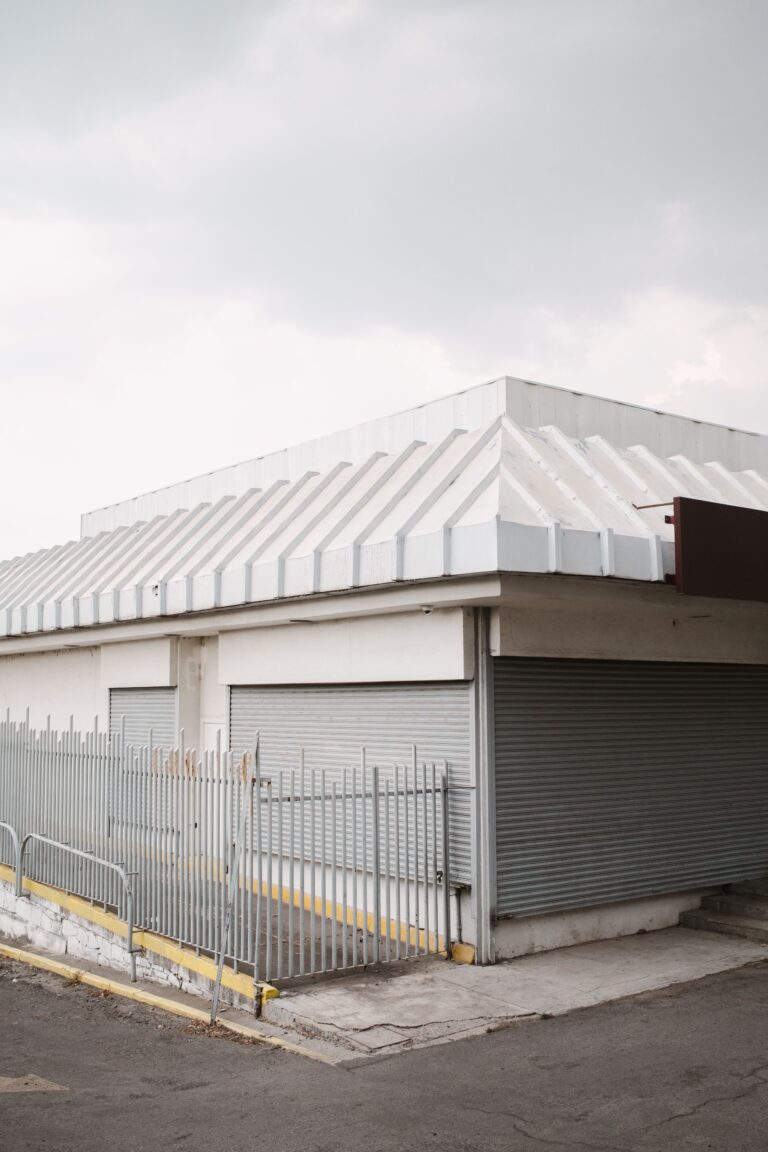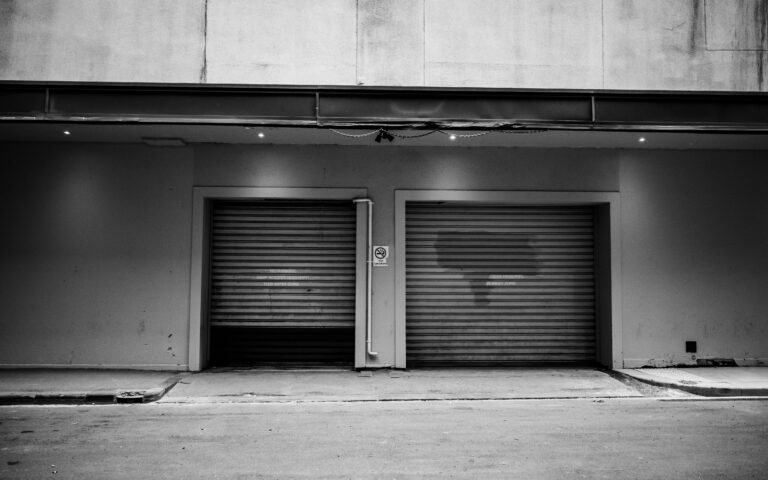
The institutional jobs I’ve done aren’t case studies I can name. The buildings ask for that. Most operators in this category don’t want their security improvements written up with a photo and an address, for reasons that are obvious once you’ve worked one of these jobs.
What I can describe is the pattern. Five government and institutional installs over nine years — a federal facility, two correctional environments, a social services office, a youth-services center. None of them looked like the retail installs that make up most of my work. Different paperwork. Different specs. Different conversations entirely. If you manage facilities at a sensitive building and you’re trying to figure out how a shutter install actually goes there, here’s what to expect.
Why do government and institutional jobs feel different from retail?
Three things change once you cross into this category.
The end user isn’t the buyer. At a liquor store, the owner picks up the phone, walks me through the building, signs the quote. Same person. At a government building, the operations staff who’ll use the shutter daily are usually three steps removed from whoever signs the purchase order. Spec discussions happen at one level, install scheduling at another, daily operation at a third. The vendor who shows up to a retail walk-through with a casual conversation gets a different reception when the room has procurement, facilities, and an end-user supervisor in it.
Specs reference standards by name. A retail spec is usually “rated security shutter on the storefront opening.” A government spec is “rolling shutter conforming to UL forced-entry standard X with mounting per IBC section Y.” The standard name is a real constraint. The installer who says “yeah, our product is plenty strong” without producing the spec sheet documentation doesn’t make it past the bid review.
Approval chains are long. Retail decisions land in days. Government decisions land in months. The path from “we need a shutter on that window” to “the shutter is operating” runs through committee approval, budget allocation, RFP issuance, bid review, contract award, installation scheduling, inspection, and acceptance. Each step has its own waiting period. Six months from first conversation to functional install is normal. A year isn’t unusual.
What’s actually being protected at a sensitive building?
Different from retail. The threat model is different and the install spec follows.
Records, not inventory. A government facility with confidential records — case files, beneficiary data, court documents, intake forms — has a different threat profile from a store with product on shelves. The break-in target isn’t cash. It’s the filing cabinet. What comes out of that filing cabinet creates a problem that propagates far beyond the building. The shutter is sized and rated for that threat, not for an opportunistic smash-and-grab.
Controlled access between zones inside the building. Government and institutional buildings often have public-facing areas, semi-restricted areas, and restricted areas inside the same building. Counter shutters and interior partition shutters separate these zones at close. The install can include multiple shutters at different positions, each one closing off a different zone on a different schedule. A retail install is usually one or two shutters on the storefront. An institutional install can be six or eight across the building’s internal geography.
Public-facing service windows. Front-line staff at courthouses, social services offices, and licensing windows interact with the public through small openings. Those openings need security at close that doesn’t require staff to lift heavy gates or roll heavy hardware by hand. Motorized counter shutters with one-button operation are the standard spec. Manual fallbacks for power-out conditions are usually required.
What does “rated” actually mean in government procurement?
In government bid language, “rated” isn’t shorthand for “strong.” It’s a reference to a specific testing standard. The installer who can’t tell you which standard their product meets — by number, with documentation — doesn’t qualify for the bid.
The standards that show up most often in California government specs include UL forced-entry ratings, ASTM forced-entry standards, IBC building-code references for mounting, and California Building Code amendments where they apply. Some specs also reference seismic anchoring requirements that change how the housing mounts to the wall.
The honest version: every shutter I install at a government building comes with the documentation package — the product cut sheet, the testing report, the mounting spec, the warranty document. That package goes into the building’s facilities file alongside the as-built drawings. The next time the building is inspected, audited, or assessed, the file is what gets pulled. If the documentation isn’t there, the install isn’t compliant, regardless of how the physical product performs.
If you’re managing a government facility and looking at a bid response that doesn’t include the documentation package up front, that’s a flag. Ask before contract award. The cost of getting it later is more than the cost of asking now.
How does the procurement timeline change what the install looks like on the ground?
The install itself isn’t longer than a retail install. The work around the install is.
Pre-install. Site survey often requires multiple visits because different stakeholders need to see different things at different times. Facilities walks the building with the installer once. End-user staff walks it separately to confirm the operational impact of the install. Procurement does a third walk to verify the bid spec matches what got installed.
During install. Background-check or vetting requirements for contractor access vary by facility. Some sites require a same-day vetting form. Some require fingerprinting and a background check a week ahead. Some require an escort during the install. Plan the install crew’s clearance needs ahead of the install date, not the day before.
Post-install. Acceptance inspection is more formal than retail. The facility’s inspector walks the install with the installer, checks the spec against the build, verifies the documentation package, and signs off only when everything matches. Missed details get caught here. Acceptance can fail and require rework. The good installer expects this and builds it into the timeline.
What should you do right now if you manage facilities at a sensitive building?
One — read the spec out loud, with the installer in the room, before the bid goes out. Words like “rated,” “forced-entry resistant,” “barrier,” and “mounted in compliance with” each mean specific things. If your spec language is ambiguous, the bids you get back will be ambiguous, and the install you accept may not actually meet what you needed. Sit with the installer and walk every defined term in the spec before the RFP is issued.
Two — verify the documentation package is in the bid response, not promised for later. The product cut sheet, the testing report, and the mounting spec are the contract. An installer who can produce them at bid is an installer who knows what they’re delivering. An installer who says “we’ll get those to you after award” is an installer who may not actually have them. Ask up front.
Three — build the installer-facility relationship before the bid. The strongest institutional installs I’ve done were with facilities teams who’d had me out for a walk-through before the RFP was written. The conversation about what the spec should require runs better when the installer already knows the building. The bid still goes through the standard process — but the spec that goes out is a better spec when somebody who’s actually installed at sites like yours helped write it.
Questions facilities and procurement teams ask after reading this
Will my facility’s confidentiality be respected if I publicize a security upgrade? The default for any government or institutional install I do is no public reference to the site. No photos. No address. No naming the agency. The references I provide for future bids are anonymized — “a federal facility in Northern California,” “a correctional environment,” “a social services site in Sacramento.” That covers most facility confidentiality requirements. If your site has specific confidentiality language above and beyond default — a court protective order, a federal information-protection requirement, a non-disclosure clause — surface it during the bid review and we’ll match it in writing.
Do you handle the prevailing wage compliance paperwork for California public-works jobs? Yes, for projects that fall under California prevailing wage rules. The paperwork — certified payroll reports, fringe-benefit documentation, apprenticeship verification — gets filed on the schedule the project requires. Confirm during the bid review that prevailing wage applies; some institutional projects fall under it and some don’t depending on funding source and contract value. The installer who’s done this before will ask the question; the one who hasn’t will get caught by it later.
What’s the realistic timeline from RFP issuance to operational install at a government building? Six to twelve months for most California government and institutional projects. RFP open-and-close takes 30 to 60 days. Bid review and award takes 30 to 90. Contract execution and notice-to-proceed adds another 30. Material lead time is six to eight weeks once the contract is signed. Install itself is one to three days. Acceptance and documentation adds two weeks. Compress where you can but don’t expect the calendar to compress by more than a fifth of the total.
If our facility has a vetted-vendor list, how do I get a new vendor on it? Most lists have a formal application process. The vendor submits their qualifications package — references, financial statements, insurance documentation, prior project list — and the facility’s procurement team reviews. The faster path is usually to bring the vendor in for a single project under a sole-source justification (if your facility’s rules allow it), then add them to the standard list after the first job goes well. Talk to your procurement officer about which path the facility prefers.
Where to start
If you manage facilities at a government, institutional, or other confidentiality-sensitive site and you’re thinking about a security shutter install, send me your RFP language, your facility type, and your timeline. I’ll walk you through what the spec needs to include, what documentation I’d provide at bid, and what the realistic timeline looks like for your project. The first conversation doesn’t put your facility on any list and doesn’t require a bid commitment.
— Jessie Bajwa
Owner, Affordable Security Shutters
Fairfield, CA · 707-840-3435