Before somebody buys a shutter from me, the sharp ones ask a version of the same question. “Can’t they just pry it open? If someone really wants in with a crowbar, what am I actually paying for?”
Good. Ask me that. A shutter is a serious purchase and you should know exactly what it does before you put one on your store.
So let me answer it the way I’d want it answered.
Nothing is a vault. That’s the wrong bar.
If you’re asking whether a security shutter can be made completely impossible to defeat, the answer is no, and anybody who tells you otherwise is selling you something. Given enough time, the right tools, and nobody around to notice, a determined person can get through almost anything.
But that’s not the situation a break-in actually is. A break-in happens fast, at night, in a hurry, by somebody who wants to be gone before anyone shows up. The number that matters is time: how long it takes to get through, and how much noise that takes. That’s what decides whether somebody finishes the job or gives up and leaves.
A shutter’s whole value is that it moves that number in the wrong direction for them.
What “forced-entry resistance” really means
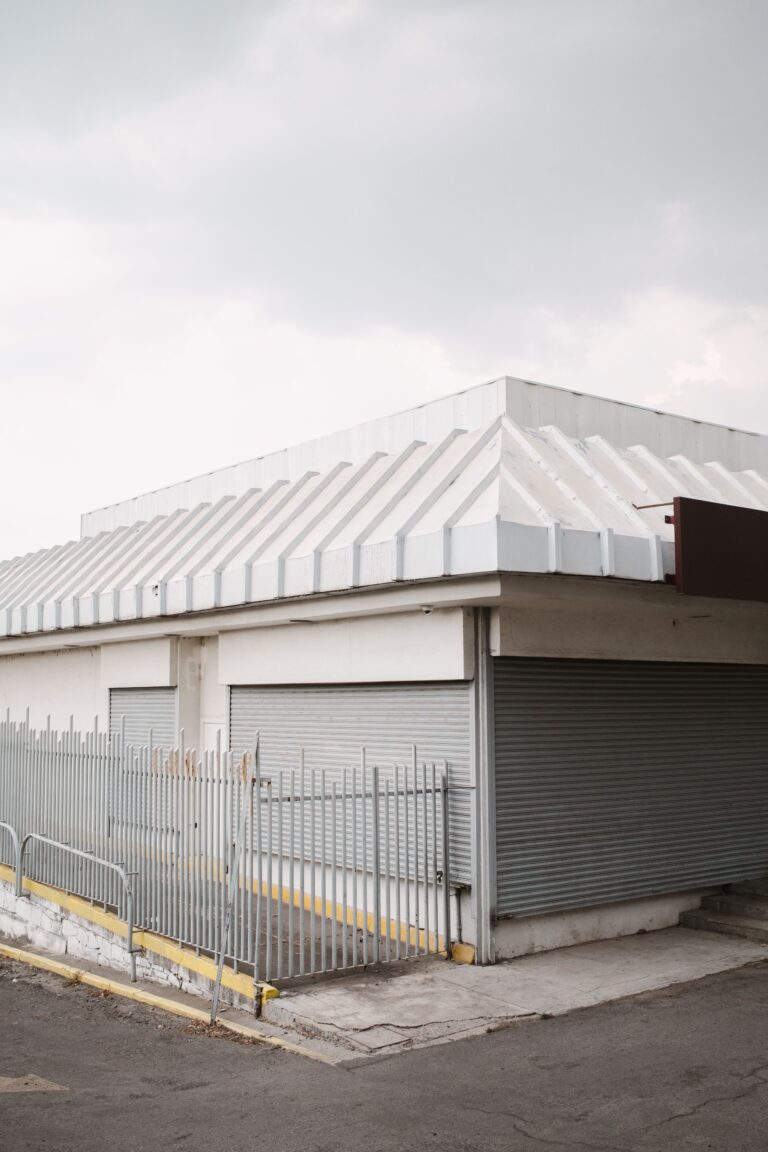
A reinforced aluminum shutter isn’t a thin gate you can bend. The slats interlock, the whole curtain seats into side tracks bolted into your building, and it’s anchored top and bottom. There’s no easy edge to get a bar under and no single point that pops if you yank on it.
Somebody trying to force it has to work at it. They have to make sustained noise, stay exposed at your storefront for real minutes, and probably fail anyway. Compare that to a glass door, which is one swing and you’re in. The shutter turns a five-second job into a several-minute job, and in what I’ve seen, most people who break into stores won’t spend several loud minutes on one door when there’s an easier store down the street.
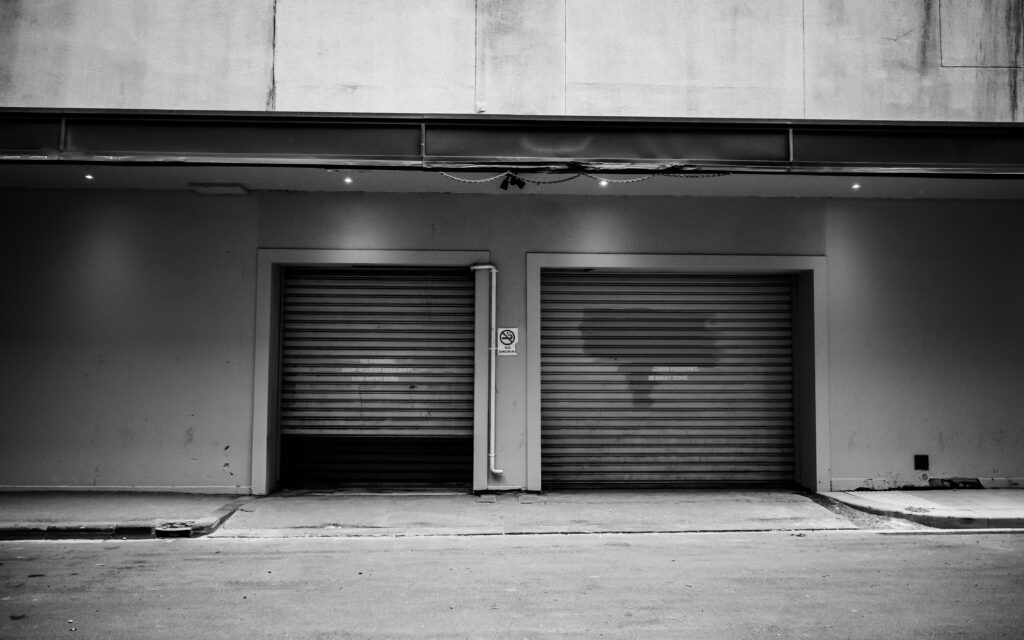
I’ve had it go exactly that way. Somebody tried a shuttered back door on a gas station, worked at it, and couldn’t make it through. They gave up. The owner reinforced it further and moved on with his life. No break-in — just marks on the shutter and a story.
The cheap version is where people get burned
Here’s where I get blunt. There’s a big difference between a real security shutter and the folding scissor gate a lot of older storefronts still have.
I’ve been called out to a store where somebody cut straight through a scissor gate to get in. Those gates look like security, but they’re thin, they’re exposed, and a person with a cutting tool goes through one without much trouble. That’s the false sense of security people are actually afraid of — and they’re right to be afraid of it. It’s just usually attached to the cheap barrier, not the real one.
When somebody asks me “can’t they just cut through it,” what they’ve often seen is a scissor gate fail, and they’re assuming every barrier is that flimsy. A reinforced aluminum roll-down is a different category of thing. Match the barrier to the threat and you don’t end up as that story.
Where the pry attempt usually goes
The pattern I see over and over: the shutter holds, the alarm goes off, and the person leaves. That’s the shutter working. It only has to do one thing here — outlast the few minutes somebody is willing to spend, and the moment before the noise brings someone.
The failures I get called about are almost never a forced shutter. They’re the openings that didn’t have one. The unshuttered back door. The side window nobody thought to protect. The glass storefront with cameras pointed at it and nothing physical in the way. When people picture “they pried it open,” they’re usually picturing an attack on the weakest opening on the building. The fix for that is to close the soft opening, not to buy a tougher shutter.
The one thing that beats a shutter is a gap
A shutter rarely gets beaten by force on the shutter itself. It gets beaten by the gap next to it — a shutter on the front door and nothing on the roll-up in back, the obvious opening covered and the one around the corner left bare. A barrier only counts on the openings it covers.
That’s why I walk the whole building before I quote anything, not just the front. The point isn’t to sell you the most shutters. It’s to make sure the store doesn’t have a five-second opening sitting next to a five-minute one.
Where to start
If the crowbar question is the thing keeping you from deciding, the way to answer it is to look at your actual storefront and your actual weak points, not a brochure. Give me a call. I’ll come walk it with you and show you where a real barrier would slow somebody down and where you’ve got a gap right now. If your openings don’t need a shutter, I’ll tell you that too.
— Jessie Bajwa
Owner, Affordable Security Shutters
Fairfield, CA · 707-840-3435