Last year somebody sent me a surveillance video I keep coming back to.
A camera shop on a busy Berkeley street. Four people pull up in the middle of the night, back a car onto the sidewalk, and drive it through the front of the store. They’re inside in seconds. They walk out with armfuls of inventory. The video runs about a minute.
The store had security shutters. The store had bollards in front of the sidewalk. The car still got through.
That video’s doing a job for me. It’s showing me — and now showing other operators — what the next layer of storefront security has to handle. A break-in through a door and a break-in through a wall aren’t the same problem. They don’t get stopped by the same equipment. If you run a retail business with a street-facing storefront, this is worth understanding before it shows up in your own camera feed.
What is a RAM raid, and why are you seeing more of them?
A RAM raid is what the name says. A vehicle gets used as the entry tool. Usually a stolen car, sometimes a truck. The driver targets a wall, a window, or a door, and uses the car to make an opening big enough to walk inventory out before police arrive.
RAM raids have happened for years. They’re getting more frequent. Police-report digests across the Bay Area and the Sacramento Valley have started carrying these almost monthly. Cannabis dispensaries, jewelry stores, electronics shops, vape and smoke shops — anything that holds high-margin, easy-to-move inventory near a street.
Part of why it’s growing is a response to better front-door security. When more storefronts installed shutters and reinforced doors, the door stopped being the easy way in. So some criminals stopped trying the door. The shutter’s doing its job. It’s moving the attack to a different surface. That’s the moment we’re in.
Why didn’t the bollards save that storefront?
The Berkeley shop had bollards. Bollards are short metal posts set into the ground in front of a building to stop a vehicle from reaching the wall. Done right, they work. Done wrong, they’re decoration.
Two things went wrong in that video.
First, spacing. The bollards were too far apart. The car was small enough to fit between them and keep going. A bollard line is only as good as the gaps it leaves. If a compact car can drive through, the line’s doing nothing.
Second, mounting. The way a bollard is set into the ground decides whether a car bounces off it or knocks it over. The best ones are sunk three to four feet into concrete. The cheap ones get bolted to the surface with a few lag screws. The cheap ones come off the moment a car hits them. From the angle of that video, those bollards were the cheap kind.
You can see why this matters. A storefront owner pays for bollards thinking the building’s protected. The bollards photograph well. The insurance form looks complete. None of that helps the morning the wall comes down.
What does a security shutter actually stop — and what doesn’t it?
Here’s the honest version of what a security shutter is for.
A shutter stops a person. It stops a crowbar. It stops a brick, a hammer, a glass-breaking attempt, a hand reaching through a smashed window. It buys the time alarms and police response need to matter. It deters most attempts before they start, because the people who do this kind of work see the shutter, register that the door isn’t easy, and move on to the next storefront.
A shutter doesn’t stop a vehicle. A car coming at a wall has thousands of pounds and momentum behind it. The shutter’s engineered for a different threat — the kind that comes from a human standing in front of your store with tools and a few minutes. That’s the vast majority of break-ins I’ve ever seen. It’s not the only kind.
What does layered storefront defense actually look like?
Most storefronts treat security as a single product decision. Should I get a shutter. Should I get an alarm. Should I get cameras. The right way to think about it is layers — each layer covers something the others don’t.
Lighting and visibility. A well-lit storefront with no hiding spots is the first layer. A poorly lit corner is an invitation.
Alarm and monitored response. The alarm isn’t what stops the break-in. It’s what shortens the time the people inside are willing to stay. Three minutes of alarm and they leave with less.
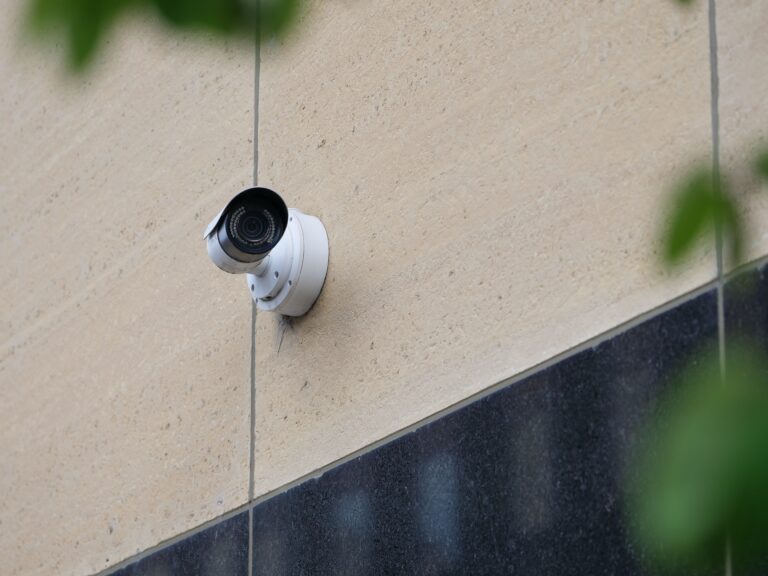
Cameras. Cameras catch what happened. They don’t stop it. They matter after the fact for insurance and investigation, and they sometimes deter when they’re obviously in view, but they don’t lock a door.
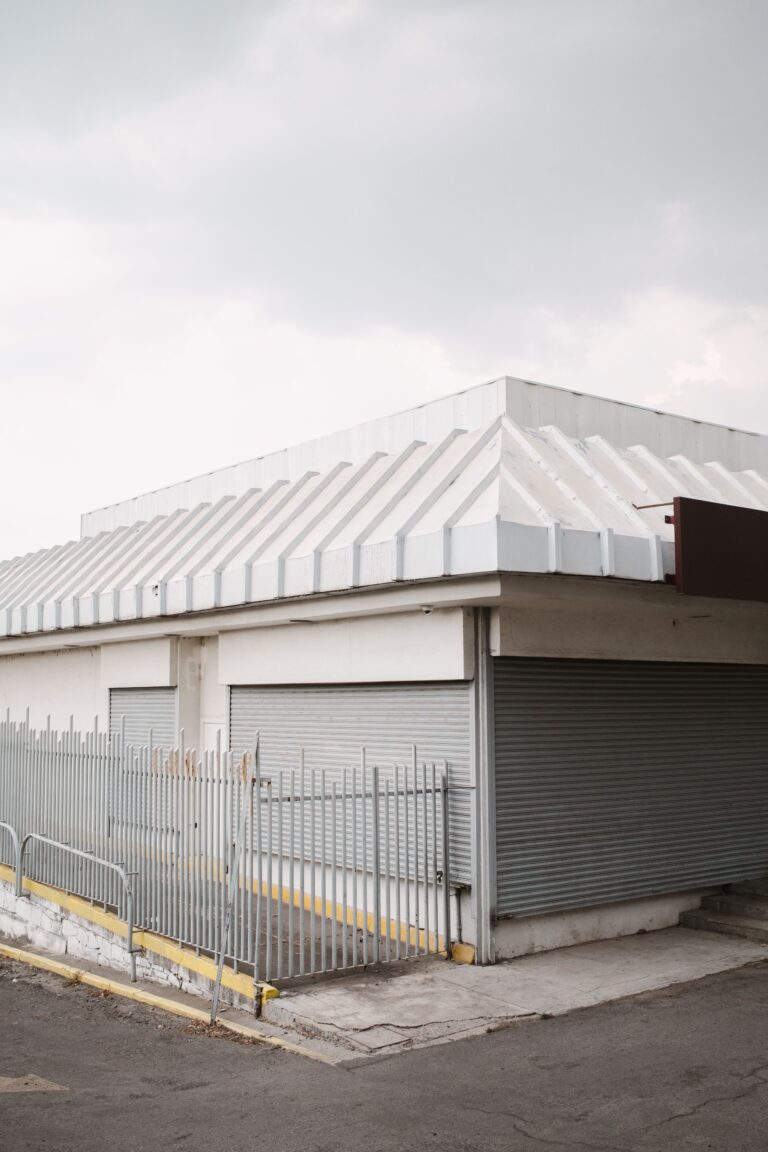
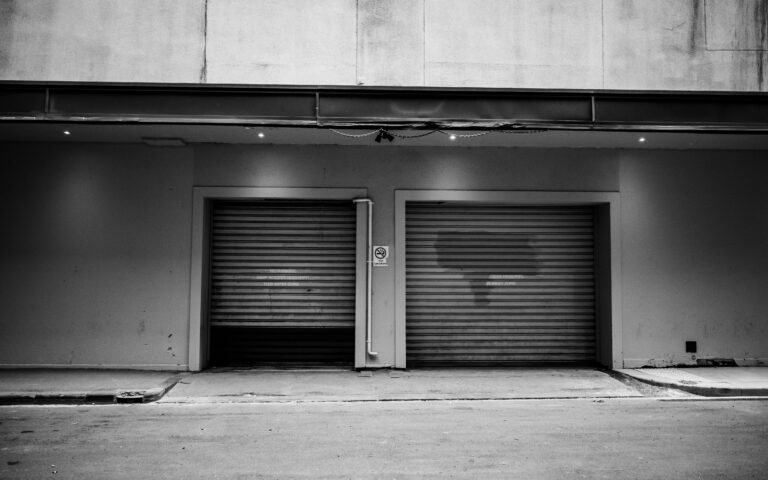
Security shutters. The shutter is the physical barrier between a person and your inventory. This is what I install. It handles the high-frequency threats — pried doors, smashed glass, after-hours entry attempts.
Bollards and site design. The bollard is the layer that handles the vehicle threat. Done right — sunk deep, spaced narrow enough that no small car can fit through, placed in line with every wall and window the street can reach — it’s the layer that stops the kind of attack that breaks every other layer at once.
A storefront with all five layers is hard to crack. A storefront with just one or two is a coin flip. Skip the question of which product to buy. Ask which layer your storefront is missing, and which threat that exposes you to.
Is your storefront one of the ones at risk for a RAM raid?
Not every business needs to worry about a RAM raid. The threat’s concentrated.
If your storefront sits behind a deep sidewalk with no vehicle access, you’re mostly fine. If the wall is set back from any parking area or driveway, you’re mostly fine. If you’re in the middle of a strip with other businesses pressed up against your walls, you’re mostly fine.
If you’re on a corner. If you face a parking lot. If you sit at the end of a driveway. If there’s a wide sidewalk between your wall and the street with no curb breaks. Those are the storefronts where I’d look at the bollard question seriously, on top of whatever you’ve already done about doors and windows.
The pattern in the police reports tells you who’s getting hit. Standalones. Corners. Strip-ends. Walls that face parking lots. If that’s you, the next layer is worth a conversation.
What should you do right now if you’re worried about a RAM raid?
One — figure out whether you’re geographically at risk. Walk your storefront from the street and ask: can a vehicle physically reach my wall or window? If the answer is yes — corner lot, parking-lot-facing, wide sidewalk with no curb breaks, end of a driveway — you’re in the risk pool. If the answer is no — mid-block, deep setback, no curb cuts nearby — you’re mostly fine. Most of this isn’t ambiguous once you walk it.
Two — audit the layers you already have. Lighting, alarm, cameras, shutter, bollards. Which of the five do you have today, and which are missing? The honest answer is usually three out of five, with bollards and one other missing. The missing layer is your real exposure, regardless of how solid the layers you have are.
Three — if bollards are the missing layer, talk to a bollard installer specifically. Shutter installers don’t install bollards as a primary business — it’s a different trade with different equipment and different permitting. I work with bollard installers I trust and can refer you, but the install itself should be done by someone who does it as their main thing. Don’t let any shutter company tell you they’ll throw in bollards as an add-on without showing you the bollard installer’s credentials.
Questions storefront operators ask after reading this
Are RAM raids covered under standard commercial insurance, or do I need a special rider? Standard commercial property insurance usually covers RAM raid damage and inventory loss as part of the burglary or vandalism coverage — there’s not typically a special “RAM raid” rider you’d need. But the carrier’s response on the next renewal can be sharper than for a standard break-in, because the loss is bigger and the visible damage is more dramatic. If you’ve had a RAM raid claim or are in a high-risk geography, ask your broker specifically how the carrier categorizes vehicle-impact damage and whether your liability coverage extends to bystander injury if the attack happens during business hours.
How quickly does a proper bollard install actually take, from decision to operational? For a straightforward sidewalk bollard install on commercial property — four to eight bollards in front of a storefront — plan three to six weeks from the day you sign to the day they’re in the ground. Most of that is permitting; the install itself is usually one to two days. If the install involves cutting into the sidewalk in a way that needs the city’s right-of-way permission (most do), add time for that approval. If your sidewalk is private property, the path is faster. Ask your installer up-front whether the install needs a city permit or just a building permit.
How do I find a reputable bollard installer if I don’t know one? Two paths. First, ask a commercial general contractor who works in your area — bollards often get installed during commercial site improvements, and GCs know which subcontractors they’d hire on their own building. Second, ask any storefront you’ve seen with bollards installed who installed them and whether they’d hire that company again. The good bollard installers are usually small, regional, and not heavily marketed — the path to finding them is referral, not search. I refer the ones I trust when shutter clients ask.
Can the same install crew put in both shutters and bollards on one job? Almost never the same crew, but often coordinated through one project. Shutters and bollards are different trades with different equipment — the shutter install is overhead carpentry and structural mounting; the bollard install is concrete coring and ground anchoring. What can be coordinated is the timing and the permit process, so the storefront isn’t disrupted twice and the city’s involvement is consolidated. If you’re doing both as part of a single upgrade, tell whoever you call first about the full scope so they can sequence with the other trade.
Where to start
If you’re sitting with this and trying to figure out which layer your storefront is missing, give me a call. I’ll come walk it with you. If a shutter’s the right answer, I’ll tell you that. If you need bollards on top of it, I’ll tell you that too — and point you to the bollard installer I’d trust. If your storefront is the kind that doesn’t need either, I’ll tell you that too.
— Jessie Bajwa
Owner, Affordable Security Shutters
Fairfield, CA · 707-840-3435