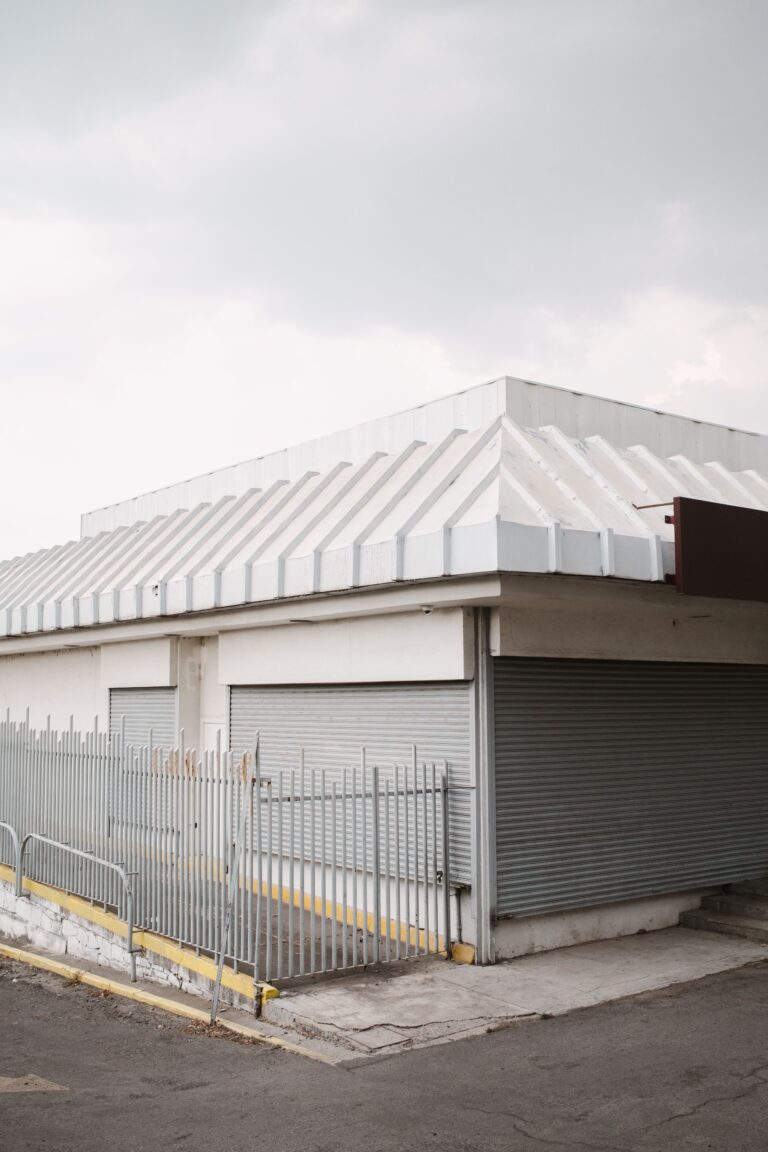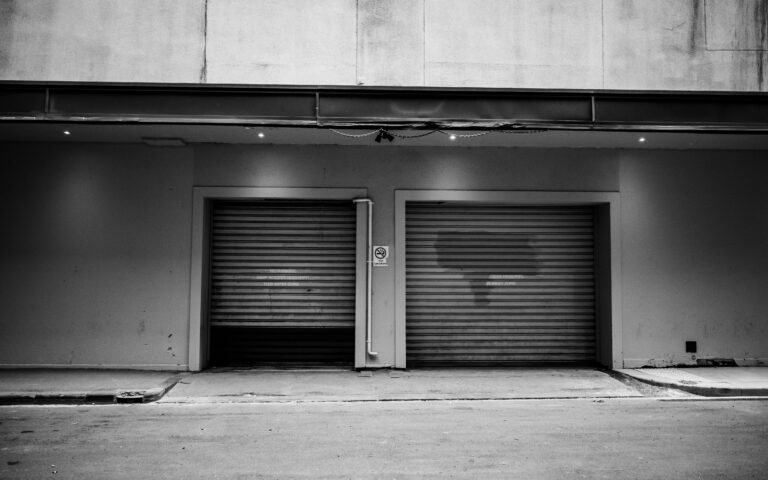
Most storefronts don’t call me first. They call me after they’ve already tried something cheaper.
Sometimes it’s a scissor gate that came with the store and they figured was good enough. Sometimes it’s a roll-up grille a previous owner installed. Sometimes it’s a security film on the glass, or a heavier deadbolt, or an alarm system somebody sold them in 2019. They tried a layer. The layer either held, or it didn’t.
Six years of going behind those layers — replacing the ones that didn’t hold, sitting next to the ones that did — has taught me what each layer is for. And where each one stops being for it.
If you’re trying to decide what to spend on for your own storefront, this is what I’d tell you before you spend on anything.
How well do scissor gates actually hold up?
The scissor gate is the most common cheaper alternative I find on a storefront. They’re everywhere. They were the standard answer to commercial security for thirty years and a lot of buildings still have the originals.
A scissor gate works as a deterrent. You pull it across the storefront, lock it at the side, and a person walking by sees that the entry is closed off. Against a casual attempt, it’s enough.
Against a determined attempt, it isn’t. I’ve walked into multiple stores where the scissor gate was pried open, cut with a portable angle grinder, or simply bent enough at one end to let a body through. The lock side is usually the weak point. The cross-pattern of the gate is designed to slide, which means the same mechanism that lets it close also lets a person pry it apart with the right tool.
The other problem with scissor gates is Americans with Disabilities Act (ADA). The code on commercial entries has updated. A storefront entry usually needs around thirty-seven inches of clearance for wheelchair access, and many older scissor gates eat into that clearance when they’re folded back during open hours. I’ve done at least one job in Hayward where the city cited the owner for that exact issue. The fix was the same as it would’ve been for a security upgrade. The scissor gate came out and a shutter went in.
What do roll-up grilles actually stop?
The roll-up grille — the see-through kind with the gaps — is the next layer up. Most malls use them. They’re popular because they let you see through the storefront after hours, which can be a security feature in itself if you have cameras pointed at the inside of the store.
The grille handles two things well. It stops a person from reaching in and grabbing inventory off a display. It also stops most kicked-in entry attempts because the metal grid is harder to deform than glass.
What it doesn’t stop is glass-breakage attacks on what’s behind it. If the store has a glass storefront inside the grille, somebody with a hammer can put a hole through the glass and reach in around the grid from a couple of feet away. The grille slows them down without keeping them out.
In a high-value retail context, a grille is often what gets replaced or supplemented with a solid shutter when the inventory inside starts being worth more than a slowdown.
Does security film on the glass really protect against break-ins?
Security film is the layer most owners try when they don’t want to change the look of their storefront. A clear or lightly-tinted film gets bonded to the inside of the glass, and when somebody hits the glass with a rock or a crowbar, the film holds the glass together for a few extra seconds.
Security film slows entry; it doesn’t stop it.
What it buys you is time — the difference between a one-second smash-and-grab and a thirty-second attempt where the person doing it gets tired, gets noisy, and starts looking around. That’s enough to make an alarm matter, to make a camera worth having, and to send some attempts to a different storefront. It isn’t enough to stop someone who has decided your store is the one.
I’ve put security film on a few jobs where the owner wanted the storefront to keep its open look during the day. In every one of those, the film was a complement to a shutter.
How much does a better lock and a louder alarm actually do?
The bottom of the layer stack is the one most owners try first. Heavier deadbolt. Reinforced strike plate. Alarm system upgraded from the one that came with the building.
These layers matter. A properly-installed deadbolt with a long strike screw is harder to defeat than a builder-grade one. A monitored alarm with a fast response can cut a break-in short. I’m not going to tell you to skip these.
What they don’t do is stop the physical attack on the door, the window, or the wall. They handle the wrong end of the problem. A break-in attempt at three in the morning targets the door surface or the window, almost never the lock itself.
What’s the right order of operations for storefront security?
Here’s the order I’d build storefront security in if I were starting from scratch.
Lighting first. A storefront with no shadows and no hiding places is the cheapest layer you can add and the one a lot of owners skip. It deters before any other layer has to do work.
Then alarm and monitored response. The alarm doesn’t stop the break-in. It shortens it. Three minutes of audible alarm and most people leave with less than they planned to.
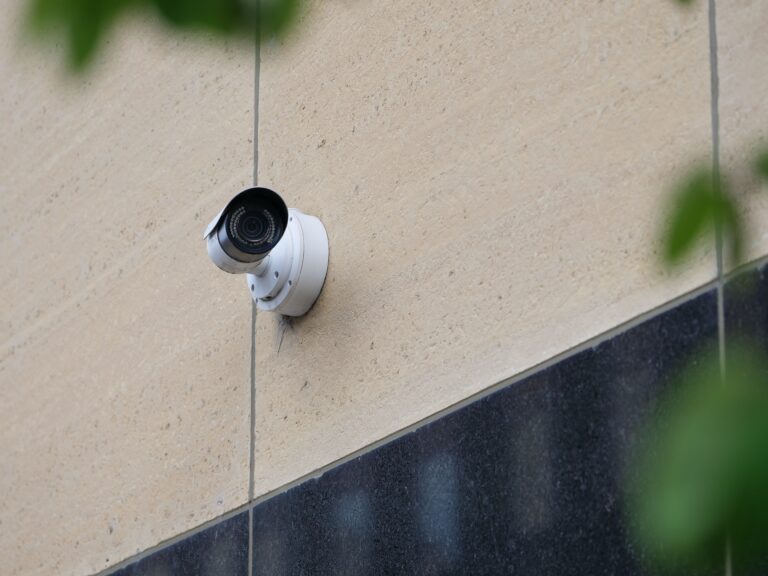
Cameras for evidence and for the deter effect when they’re visible.
A good lock with a long strike plate. The cheap part of the stack and one of the most important.
A security shutter on the entries that need physical protection. The shutter handles the threat the other layers can’t.
Bollards if your storefront sits where a vehicle can reach the wall.
Most storefronts don’t need every layer. Before you spend on a shutter, walk your stack and find the cheapest layer you’re still missing. Sometimes that’s a shutter. Sometimes it’s lighting and a better alarm. The right question is which layer your storefront is still missing.
If your storefront sits on a corner, a parking lot, or a wide sidewalk, what should you check first?
Not every business needs every layer at the same priority. Most storefronts on a busy mid-block face need to think about the entry layer (locks, alarms, glass, shutter) more than the vehicle layer (bollards). Most storefronts on a corner, a parking-lot-facing wall, or the end of a strip need to think about the vehicle layer alongside the entry layer.
Walk your storefront from the street. Look at the wall. Ask whether a determined person could get through with the tools you’d expect them to bring (crowbar, hammer, brick, rarely an angle grinder). Then ask whether a vehicle could physically reach that wall. The answers tell you whether your stack should add a shutter, a bollard line, or both.
What should you do right now to evaluate your own setup?
One — walk your storefront with fresh eyes after closing time. Stand outside at the time of day a break-in would happen — late evening, after the store is closed, while the lighting is what an intruder would actually see. Where are the shadows? Where would somebody stand without being noticed? Where would somebody work without being seen from the street? The walk takes ten minutes and tells you more than any security checklist.
Two — list every layer you already have, then mark which ones are doing real work. Lighting, alarm, cameras, glass type, lock quality, scissor gate or grille or shutter, bollards. Some of these you have. Some of these are decorative — they exist but don’t actually stop anything. Be honest about which is which. The gap between what you have and what’s working is your real exposure.
Three — fix the cheapest missing layer first. Lighting and a better lock cost less than a shutter and might be the missing piece. If lighting is already good and the alarm is solid, the shutter might be the right next step. Don’t skip the cheap layers to get to the dramatic ones. Each layer is buying you something specific, and the cheap ones cover threats the expensive ones don’t bother with.
Questions storefront operators ask after reading this
If I install a scissor gate or roll grille first and a shutter later, am I wasting money? Not necessarily, depending on how the install was done. A scissor gate or grille that was inherited with the building or installed before you knew better is a sunk cost — keep it as a daytime presence-deterrent or remove it during the shutter install. A scissor gate or grille you install today knowing you’ll add a shutter in a year is harder to justify; in most cases you’re better off skipping the interim step and going straight to the shutter. The exception is if your budget genuinely forces a staged approach — in that case the interim layer is better than no layer for the months between.
Can I get a real security assessment without committing to any product purchase? Yes. I do free walk-throughs and so do most reputable installers in the area. The honest version of the conversation tells you what you actually need — sometimes that’s a shutter, sometimes it’s a lighting upgrade and an alarm tune-up, sometimes it’s nothing because your existing setup is already fine for your threat profile. If an installer won’t walk your storefront without a deposit or a quote commitment, that’s a sign you’re talking to someone who needs the sale more than they want to give you accurate advice.
Do any of the cheaper alternatives qualify for insurance premium reduction the way shutters do? Sometimes, but rarely as much. Carriers generally treat rated security shutters as a meaningful underwriting input. Scissor gates and roll grilles are usually treated as a baseline expectation rather than an upgrade — having one doesn’t move the needle, but not having one might. Security film and reinforced glass are sometimes recognized as a partial credit, depending on carrier and zip code. The biggest premium movers in the entry-layer category are rated shutters and monitored alarms with documented response. If you’re choosing layers based on insurance impact, ask your broker which specific products their carrier weights highest.
If my landlord installed the scissor gate that’s already on my building, who owns the upgrade decision? Usually you, the tenant, with landlord notification. The scissor gate is part of the building, but the decision to upgrade your security setup is part of your tenancy. The right approach: send the landlord a one-page note explaining what you’re proposing to install, what happens to the existing scissor gate (most installers can remove and dispose of it, or you can offer it to the landlord for reuse), and what the install will look like from the building’s perspective. Most landlords approve readily because the upgrade improves the building’s protective value. The exception is historic-facade or design-controlled buildings where the landlord owns the exterior modification decision.
We’ve run this same walkthrough for storefronts in Petaluma and Sunnyvale weighing scissor gates against a full shutter.
Where to start
If you want a second set of eyes on what your storefront already has and what it still needs, give me a call. I’ll walk it with you. If a shutter’s the right next layer, I’ll tell you that. If a cheaper layer would get you most of the way for now, I’ll tell you that too.
— Jessie Bajwa
Owner, Affordable Security Shutters
Fairfield, CA · 707-840-3435