If you’re trying to figure out what kind of physical security your storefront actually needs, this guide is for you. We’ve spent six years installing nearly 500 commercial security shutters across Northern California, across every retail vertical you can name. We sell six different product categories. The right answer for your business is not always the same as the right answer for the business next door.
This guide is structured so you can scan it. Find the section that matches your situation, read it, and you’ll have a clear next step. If you want depth, the rest of the guide is here for you.
What’s the 30-second answer for your business type?
If you’re in a hurry, here’s where to start based on what you run.
- Liquor store — Solid rolling shutters on every street-facing opening. Exterior if your building takes it; interior if not. Skip to the liquor section.
- Cannabis dispensary — Perforated rolling shutters on the storefront, plus polycarbonate inside display cases. Read your CUP language before you finalize anything. Skip to the cannabis section.
- Gas station / convenience store — Solid rolling shutters on the front. Often with key fob and app access. Skip to the gas station section.
- Jewelry store / high-end retail — Perforated shutters in bronze or black, plus polycarbonate or riot glass in display cases for daytime smash-and-grab protection. Skip to the jewelry section.
- Optometrist / specialty healthcare — Rolling shutters on display windows, often interior-mounted. Sometimes counter shutters at reception or dispensing windows. Skip to the optometrist section.
- Restaurant / food service — Depends heavily on layout. Patio openings, service windows, and main entry are different decisions. Skip to the restaurant section.
If your business isn’t on this list — pawn shops, smoke shops, e-bike stores, social services offices, government buildings, warehouses — we still have an answer for you. Most of the principles below apply.
How should you think about retail security in layers?
Before you pick a product, picture your storefront from the outside in. There are four layers between a would-be intruder and your inventory, and a good security setup deals with all four.
Layer 1: Deterrence. The visible signal that your store is hardened. Lighting, cameras, and shutters all work as deterrents because they tell someone walking past that this isn’t an easy target. Most attempted entries are aborted at this layer.
Layer 2: Physical barrier at close. The thing that physically stops someone from getting in after hours. Rolling shutters, accordion gates, and scissor gates all live in this layer. This is where most of this guide focuses.
Layer 3: Daytime protection. Your store is open. People are inside. Product is on the shelves. The threat profile is different — smash-and-grab, snatch-and-run, or armed robbery during business hours. Polycarbonate display cases and riot glass overlays live here.
Layer 4: Detection and response. Alarms, monitored cameras, and response services. We don’t sell this layer, but you need it. The shutter slows them down. The alarm and the response are what catches them or sends them home.
A serious security setup includes all four layers. Most operators we work with already have layers 1 and 4 (lighting and alarms) but are weak on layer 2 (physical barrier) and don’t even know layer 3 exists. Plug those holes and you’ve done more for your store’s security than 90% of your competitors.
What are the six storefront security products we install?
Here’s the lineup, in order from most common to least common in our installs.
1. Rolling security shutters
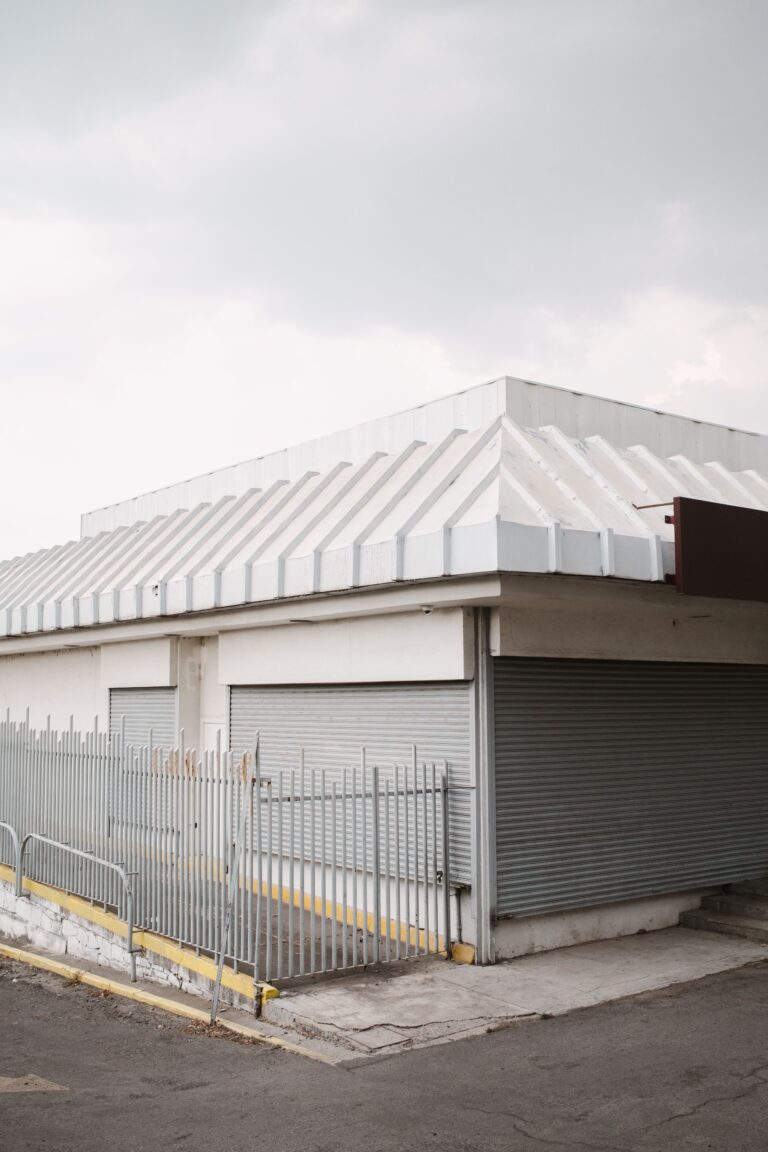
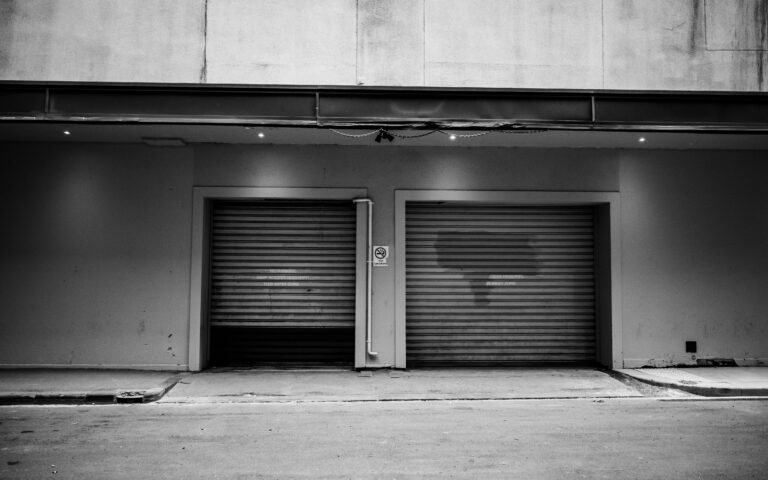
What it is: Aluminum slats that roll down from a housing box mounted above your storefront. Available solid (no light through), perforated (about 50% open), or partially perforated (about 15% open).
Best for: Most commercial storefronts. Best deterrent presence, best forced-entry resistance, longest service life.
Cost: Highest among the barrier products, but in the same range across solid and perforated variants. The price difference depends more on size, motor type, and finish than on whether the slats are solid or perforated.
Not for: Buildings whose facade can’t take an exterior install AND whose interior can’t accommodate a housing box (very rare combination, but it happens). Very tight budgets where accordion or scissor gates make more sense.
Who chooses it: Liquor stores, gas stations, jewelry, designer fashion, dispensaries, government, and most retail with significant overnight inventory exposure.
2. Accordion gates
What it is: Folding metal gates that pull horizontally across an opening from one or both sides. They stack against the wall when open. Available in widths up to roughly 100 feet.
Best for: Wide openings where a rolling shutter would be impractical or expensive. Warehouses, loading docks, large interior pass-throughs, mall storefronts with sliding glass walls.
Cost: Significantly cheaper than rolling shutters per linear foot.
Not for: Most retail storefronts. The visual presence is industrial — accordion gates look like industrial equipment, not retail security. They’re harder to make aesthetic.
Who chooses it: Warehouse operators, mall pass-through retailers, businesses with very wide openings, and operators on tight budgets who want a real barrier without the rolling shutter price.
3. Scissor gates
What it is: Diamond-pattern collapsible metal gates that pull horizontally like accordion gates but with a more open, see-through profile.
Best for: The cheapest credible physical barrier. Often used for service windows, kiosks, interior pass-throughs, and small openings where budget is the dominant factor.
Cost: Cheapest of the barrier products.
Not for: Most modern retail. The look is dated and very industrial. They also offer the least forced-entry resistance of the barrier products.
Who chooses it: Operators where budget is the deciding factor and aesthetic doesn’t matter. Storage rooms, back-of-house openings, and budget-constrained interior applications.
4. Polycarbonate shutters (clear shutters)
What it is: Clear, flexible polycarbonate sheets that can roll like a shutter. They look like glass but resist breaking — somebody can hit them with a hammer and they won’t shatter.
Best for: Daytime smash-and-grab protection on display cases, jewelry showcases, and high-value glass-fronted inventory. Also useful where you need physical protection that disappears visually.
Cost: Specialty product, priced in line with metal shutters of similar size.
Not for: Primary overnight security. Polycarbonate is a smash-resistance product, not a forced-entry product. For overnight, you want a metal shutter.
Who chooses it: Jewelry stores, dispensaries, high-end retail, and any business whose threat profile is daytime smash-and-grab on visible inventory.
5. Counter shutters
What it is: Smaller versions of rolling shutters, designed for service windows and counter openings rather than full storefronts. Same construction, different scale.
Best for: Pharmacy windows, optometry dispensing counters, check-cashing booths, hospital intake windows, government service offices, kiosks.
Cost: Lower than full storefront shutters because of the smaller size.
Not for: Full storefronts. Different product for a different scale.
Who chooses it: Specialty healthcare, financial services, government, and any business with a defined service window separate from the main storefront.
6. Riot glass
What it is: A rigid, multi-layer glass-and-film overlay applied directly to your existing storefront glass. It doesn’t roll. It stays in place permanently and turns ordinary glass into a forced-entry-resistant barrier.
Best for: Buildings where you want forced-entry resistance without changing the look of the storefront at all. Historic buildings, high-end retail, situations where any visible security hardware is unacceptable.
Cost: Varies widely with thickness — quarter-inch, half-inch, or one-inch. Higher than a basic shutter on a per-square-foot basis for thicker variants.
Not for: Operators who want a visible deterrent. Riot glass is invisible from the street, which means it won’t deter the burglar who’s evaluating which storefront looks easiest.
Who chooses it: Historic-facade buildings, high-end retail with strict aesthetic requirements, and operators looking to reinforce existing glass without modifying the storefront.
Should you choose an accordion gate or a rolling shutter? The most-asked question, answered.
If you’re price-comparing barrier options, this is where you’ll spend the most time. Here’s the honest version.
Choose an accordion gate if: Your opening is unusually wide (over 20 feet). Your budget is the deciding factor. The opening is interior or back-of-house and not customer-facing. You’re protecting a warehouse, loading dock, or industrial space rather than a retail storefront. You’re okay with an industrial visual presence.
Choose a rolling shutter if: Your opening is a customer-facing retail storefront. You want maximum forced-entry resistance. You want a long service life (rolling shutters typically outlast accordion gates by years). You want better deterrent presence. You want options on aesthetic — color, finish, perforated for visibility, solid for opacity. You expect to operate the barrier daily and want motorized convenience.
Choose both if: You have a multi-zone facility — a retail storefront on the front (rolling shutter) and a wider warehouse opening on the back or side (accordion gate). This is common for cannabis dispensaries with on-site cultivation, or for retail with attached storage.
Rolling shutters cost more upfront. Accordion gates can save you a meaningful share of the install cost. But over a 15-20 year service life, the difference narrows considerably, and rolling shutters require less ongoing maintenance. The cost question is real but rarely as decisive as it looks at quote time.
What’s the recommended security setup by business type?
Liquor stores
Setup: Solid rolling shutters on every street-facing opening — front door, side windows, alley-facing back door if applicable. Motorized with key fob access. Exterior mount if your building takes it; interior if you’re in a strip mall or have a non-conforming facade.
Why solid: A liquor store wants product invisible at night. Perforated shutters that let people see in are working against your goal. Solid makes the store look closed and uninteresting from the street.
Skip: Polycarbonate display protection (overkill for liquor inventory). Riot glass alone (won’t pass the deterrent test in a high-risk neighborhood).
Most common urgency driver: Reactive after a break-in. About 63% of liquor installs we’ve done were after the customer got hit. If you’re reading this before that happens, get a quote saved before you need it.
Cannabis dispensaries
Setup: Perforated or solid rolling shutters on the storefront depending on city display requirements. Polycarbonate sheeting installed inside display cases for daytime smash-and-grab protection. Counter shutters at any service or product-handling windows.
Why this combination: Dispensaries face two distinct threats. Overnight burglary (handled by the storefront shutter) and daytime grab-and-run on visible product (handled by the polycarbonate). One product can’t solve both.
Read first: Your conditional use permit. California cities have widely varying physical security language, and what your CUP requires drives almost every other decision.
Most common urgency driver: Proactive at build-out. About 65% of dispensary installs we’ve done were before any incident, usually as part of new construction or remodel. Dispensaries that retrofit later pay more and disrupt operations.
Gas stations and convenience stores
Setup: Solid rolling shutters on the storefront. Often with key fob distributed to operator, area director, and night staff. Phone app integration for remote operation.
Why solid: Same logic as liquor — make the store look closed and uninteresting. Cigarettes, alcohol, and lottery inventory are the typical theft targets, and they’re better hidden than displayed.
Franchise note: If you’re operating a franchise location, the area director’s preferences usually dominate the install spec. Get them on the call early. We’ve done eight stores for one Northern California gas chain in this exact pattern.
Most common urgency driver: Reactive, often after a chain-wide hit pattern. When one franchisee gets broken into, the next install in the chain happens within 60 days.
Jewelry stores and high-end retail
Setup: Perforated rolling shutters in bronze, black, or color-matched custom finish. Polycarbonate inside display cases. Sometimes riot glass overlays on storefront windows for additional reinforcement without visible hardware.
Why perforated: The brand is the storefront. Solid shutters make a high-end boutique look closed permanently. Perforated bronze shutters look like the store is closed for the night — different signal entirely.
Procurement note: High-end retail security usually buys through a general contractor, not direct from the installer. If you’re a brand security or facilities team, ask your GC who they’d use for a shutter install. We work through several Bay Area GCs for this kind of work.
Most common urgency driver: Reactive after a smash-and-grab, or proactive during build-out / remodel.
Optometrists and specialty healthcare
Setup: Rolling shutters on the display window where frames are visible from the street. Often interior-mounted to preserve the storefront aesthetic. Counter shutters can be added at dispensing or reception windows if there’s after-hours exposure.
Why this is a good fit: Optometry shops carry expensive frame inventory in highly visible display cases — Gucci, Cartier, premium brands that retail for hundreds to thousands per pair. A smashed display window can mean five-figure losses on a single hit. The threat profile is similar to jewelry, just at smaller scale.
Most common urgency driver: Proactive. Most optometry installs we’ve done were before any incident. Optometrists tend to be careful planners, and the conversation usually starts with insurance considerations rather than a break-in.
Note: Dental offices and other specialty healthcare have a similar profile but are usually lower-priority targets because the inventory exposure is smaller. Some choose shutters anyway for peace of mind.
Restaurants and food service
Setup: Depends heavily on the layout.
If you have a glass storefront with patio service: Rolling shutters on the storefront for overnight protection. Open during service hours.
If you have a service window: Counter shutter for the window specifically. Easier and cheaper than full storefront protection.
If you have an outdoor patio: Sometimes accordion gates work for closing off the patio at night, depending on the layout. Rolling shutters can also be used for patio enclosure if there’s a structural overhead surface for mounting.
Most common urgency driver: Variable. Restaurants tend to call us about specific opening problems rather than full-storefront security plans.
The right answer depends on your business, your building, and your threat profile. The wrong answer is the same product everyone else picked because somebody told them it was “more secure.”
What six diagnostic questions should you ask yourself?
If your situation isn’t a clean fit for any of the categories above, walk yourself through these.
1. What’s your primary threat — overnight burglary, daytime smash-and-grab, vandalism, or compliance pressure? Each one drives a different product choice. Most operators have more than one, and the right setup addresses the dominant one first.
2. What does your inventory look like at close? Is it visible? Is it valuable per square foot? Is it portable? Is it the kind of thing somebody can sell quickly? The answers determine how much barrier you need and where.
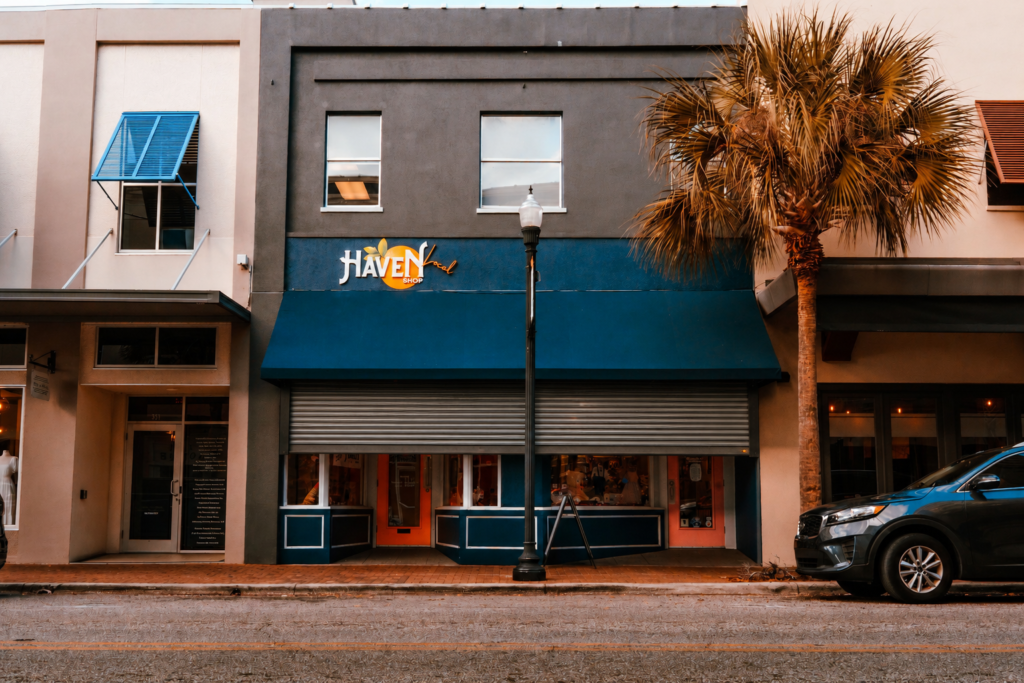
3. What does your storefront look like during the day? Open and visible? Hidden behind branded signage? In a plaza shared with other tenants? The aesthetic constraints determine perforated vs. solid, and exterior vs. interior.
4. Can your building structurally accept an exterior install? Stone fascia, historic facade, or mixed-use buildings often can’t. Interior is the answer in those cases.
5. Does your lease, HOA, or city design review allow exterior storefront modifications? If no, interior is the path of least friction.
6. Is there compliance pressure from a city, state, or licensing body? Cannabis CUP language, social services agency requirements, ADA clearance citations, jewelers block insurance warranties — any of these can mandate specific products. The compliance language drives the spec.
What should you do right now if you’re trying to pick the right security setup?
One — start with your primary threat, not the product catalog. Most operators shop products first (“solid or perforated, rolling or accordion”). The faster path is to name the threat first (overnight burglary, daytime smash-and-grab, compliance pressure, or vandalism), then let the threat dictate the product family. The diagnostic questions above are the shortcut.
Two — walk your building before any quote. Look at the facade, look at your ceiling, read your lease. Most product decisions are constrained by what your building can actually take, and walking it yourself for fifteen minutes will tell you more than any sales call. You’ll arrive at the installer conversation with answers, not questions.
Three — call only one installer to start, not three. Comparison shopping on this product category usually wastes more time than it saves. The honest installer’s quote will look similar to the dishonest installer’s quote because the underlying product costs are similar. What differs is install quality, follow-through, and whether the installer recommends what’s right for your store. Ask for references from operators in your vertical, not for the lowest bid.
Questions storefront operators ask after reading this
If I’m renting my space, what happens to the install when I leave the lease? Depends on what’s negotiated in your lease and what’s negotiated with the landlord at install time. Three common outcomes. First, the install stays with the building and the landlord either inherits it or asks the next tenant to buy it. Second, the install is removed at lease-end and the wall is restored to its original condition (the install cost includes the future removal cost, effectively). Third, the install is paid for jointly with the landlord as a building improvement and stays as part of the property. Get the answer in writing before you commit to the install. The cheapest path is usually leaving it; the cleanest path is removing it; the smart path is negotiating it with the landlord up front.
What’s the right install if my business isn’t in the guide — pawn shop, smoke shop, e-bike store, etc.? Map your business to the closest analog in the guide. Pawn shops and smoke shops behave most like liquor stores (solid shutters, visibility-deterrent strategy, reactive after break-in). E-bike stores and other high-ticket niche retail behave most like jewelry stores (perforated shutters, brand-visible storefront, polycarbonate in display cases). Specialty offices (insurance, real estate, social services) behave most like optometrists (interior shutters on display areas, counter shutters at service windows). The principles transfer cleanly even when the vertical isn’t in the lineup.
Can I get a single quote that covers multiple product types if my storefront needs more than one? Yes, and you should. Cannabis dispensaries are the clearest example — most need a rolling shutter on the storefront AND polycarbonate inside display cases AND sometimes a counter shutter at a service window. Quoting all three at once is faster, cleaner, and usually cheaper per unit than three separate quote cycles. Tell whoever you call about the full scope at first contact, even if you’re only planning to install one piece now. The quote will be more accurate and the future installs go in faster.
Do all six products come with warranties, and what should I expect on lifespan? Yes, all six come with manufacturer warranties — typically one to three years on labor and three to ten years on motors and structural components, depending on product and manufacturer. Expected service life varies: rolling shutters typically run fifteen to twenty years before major service, accordion gates ten to fifteen, scissor gates ten or so, polycarbonate ten to twenty depending on UV exposure, counter shutters fifteen to twenty, riot glass effectively the life of the building (it’s bonded to the glass). Ask for the specific warranty document before you sign — the warranty terms vary by manufacturer and the labor coverage especially varies by installer.
What to do next
Three paths depending on where you are.
If you know what you want: Send us your address, your business type, and a sentence about what you’re looking for. We’ll come walk it with you and quote the install.
If you’re between two options: Send us a photo of your storefront and a description of your situation. We’ll tell you which we’d choose and why — based on what we’d actually pick if it were our store, not what we’d most like to sell you.
If you’re not sure shutters are the right answer at all: Tell us about your situation. If we don’t think shutters fit, we’ll tell you that. If a different layer of security would do more for your money — better lighting, an alarm upgrade, or no change at all — we’ll tell you that too.
The job of an honest installer is to recommend the right product for your actual business, not the one that pads the invoice. We sell six product categories and don’t have a preference among them. We have a preference for installing the right one.
— Jessie Bajwa
Owner, Affordable Security Shutters
Fairfield, CA · 707-840-3435