There’s a common assumption that interior shutters are somehow second-tier — that they got chosen because the customer couldn’t afford or couldn’t access “the real version.” Across nearly 500 shutters we’ve installed, that assumption isn’t supported by anything we’ve seen on the job.
Roughly 20% of our installs are interior. They’re not a downgrade. They’re the right product for a specific category of building and a specific category of constraint. Here’s how the choice actually plays out, and how to know which one your building is asking you to install.
What’s the actual difference between interior and exterior security shutters?
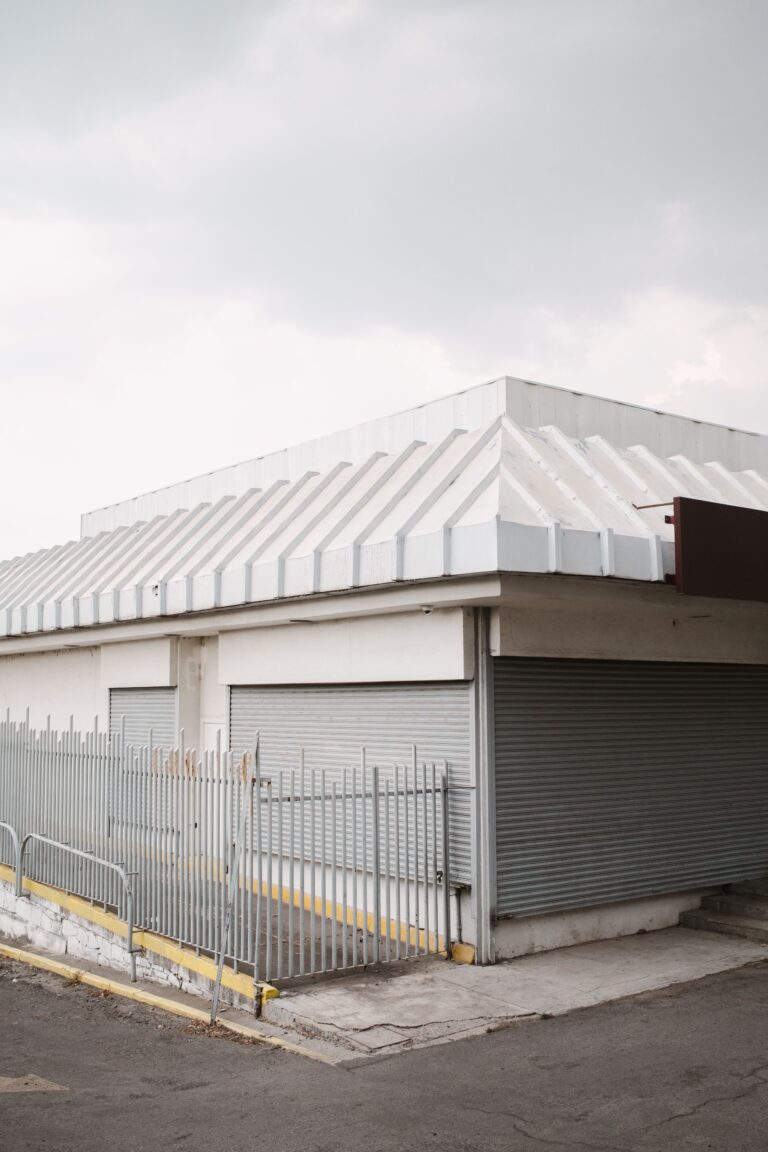
Exterior shutters mount on the outside of your building. The shutter housing — the box that holds the rolled-up shutter when it’s open — sits above your storefront, visible from the street. The shutter rolls down on the outside of your glass and doors. This is what most people picture when they think “security shutter.”
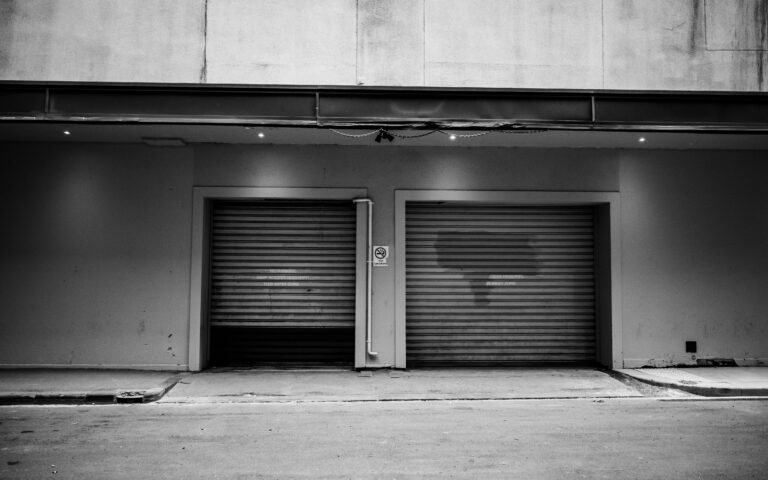
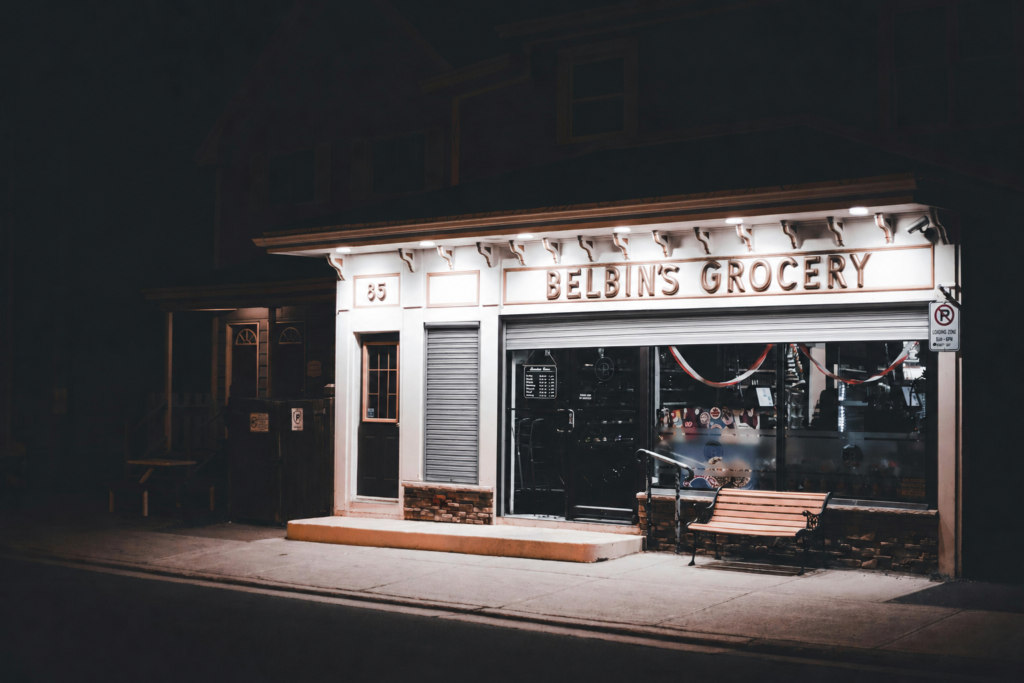
Interior shutters mount on the inside. The housing is concealed inside your ceiling or above an interior soffit. The shutter rolls down on the inside of your glass and doors. From the street, you can’t see the shutter at all when it’s open. When it’s closed at night, you see metal behind the glass.
Why are most security shutter installs exterior?
Exterior is the default for three reasons. It’s better at deterrence — the shutter is visible from the street, which signals to a would-be burglar that the storefront is hardened. It’s slightly easier to service, since the moving parts are outside and accessible without entering the store. And it’s the simpler install for most retail buildings — the contractor frames a header above the existing storefront, mounts the housing, and the shutter rolls down outside.
That’s why roughly 78% of our installs go exterior. For a typical liquor store, gas station, convenience store, or retail building with a flat exterior wall above the storefront, exterior is straightforward and effective.
When is an interior shutter the right answer?
Interior installs happen for one of four reasons. Sometimes more than one of these is true at the same time.
The building can’t take exterior. The facade prevents an exterior install. Stone fascia. Brick that doesn’t accept structural mounting. Historic facade with preservation restrictions. A storefront with rock or masonry detailing where the housing literally has nowhere to go on the outside. We did a Santa Rosa cannabis dispensary where the entire front was rock fascia — interior was the only option for the lobby shutter. Buildings tell you what they will and won’t accept, and the smart move is to listen to them.
The lease or HOA forbids it. Your commercial lease, your shopping center HOA, or your city’s design review board doesn’t allow exterior storefront modifications. This is common in San Francisco, in shopping plazas with shared facades, and in mixed-use buildings with residential above retail. Interior bypasses all of these conversations because nothing is being attached to the exterior of the building.
Compliance requires it. Some California municipal cannabis rules specifically require interior shutters in front of display cases or product shelving. The rule isn’t about exterior security — it’s about ensuring product is behind a fixed barrier overnight. The exterior shutter doesn’t satisfy that rule. Interior does. San Jose’s display-case requirement is the clearest example, but other cities have their own versions.
Aesthetics. The owner wants the storefront to look untouched from the street. Interior shutters are invisible from outside when open — the building looks like every other ground-floor retail space. For high-end retail, designer brands, and any storefront where the brand experience is part of the property, interior is the more elegant answer.
Is an interior shutter less secure than an exterior one?
This is the most common misconception we have to correct. The argument goes: an exterior shutter stops a burglar before they even get to the glass; an interior shutter only stops them after they’ve already broken through the window.
The argument is technically true and operationally meaningless. A motivated burglar isn’t stopped by either shutter — they’re slowed by both, and the vast majority of attempted entries are deterred or aborted at the first significant resistance. An interior shutter behind your storefront glass means the burglar has to break the glass first (loud, time-consuming, attention-drawing) and then face the shutter (a second, harder layer). For most threat models, that’s at least as effective as an exterior shutter on a glass-only opening.
Interior shutters aren’t a downgrade. They’re a different tool for a different building. Most owners who end up with an interior install are happier with the result than they expected to be.
How can you tell whether your building wants interior or exterior?
Three quick questions, in order. Walk the building yourself, look at it like a contractor would, and you can usually answer the interior-vs-exterior question before you even call us.
Look at the area above your storefront, outside. Is there a flat surface that could hold a housing box about 8 inches deep and as wide as your opening? If yes, exterior is on the table. If no — stone, brick, ornamental detail, signage taking up the space, or no spare wall above the door at all — exterior is going to be hard or impossible.
Check your lease and any HOA or design review documents. Look for any language about exterior modifications. If your lease requires landlord approval for changes to the storefront and you don’t have an existing relationship that makes that easy, interior is the path of least friction.
Look at your ceiling, inside. Is there clearance above the storefront opening for a housing box concealed inside the soffit or attic space? Most modern commercial spaces have plenty. Older buildings with low ceilings sometimes don’t, but that’s rarely a dealbreaker — we did a Concord liquor store where the only option was an exterior install, but the ceiling above the door was too low for a normal box. We cut into the plywood roof, mounted the housing inside the attic space, and put the plywood back. From outside, you can’t see the box at all. The shutter just appears.
Three questions, fifteen minutes, and you’ll have a much clearer sense of what your building is asking for. The answer is almost never “this can’t be done.” It’s usually “here are your two paths, and one of them is more obvious than the other.”
What should you do right now if you’re trying to decide between interior and exterior?
One — walk the building yourself before you call anyone. The three questions above (exterior wall above the storefront, lease language, interior ceiling clearance) take fifteen minutes and answer most of the decision. Walking it yourself first means the installer conversation starts from “here’s what I think my building can take,” not “I have no idea what’s possible.” That’s a faster, cheaper conversation.
Two — read your lease before you assume what’s allowed. Most operators have never read the storefront-modification section of their commercial lease. Pull it out. The words “exterior modification,” “structural alteration,” and “landlord approval” tell you whether exterior is going to be a permission-heavy conversation or a quick yes. If the lease is strict, interior bypasses the whole landlord step.
Three — drop the assumption that exterior is automatically better. Most owners walk into the conversation believing interior is a downgrade. The data says otherwise — 20% of installs go interior, and the owners who land there are usually happier than they expected. If your building wants interior, give it interior. There’s no virtue in fighting your facade.
Questions storefront owners ask after reading this
Will an interior shutter affect my insurance premium the same as an exterior one? Generally yes, with one nuance. Carriers care about whether the storefront has a rated physical barrier between the public and your inventory after hours. An interior shutter behind glass satisfies that — the barrier exists, it’s rated, it’s documented. Where insurers sometimes treat the two differently is in the underwriting questionnaire wording: a few carriers specifically ask about “external roll-down shutters” or “storefront grilles,” language that’s exterior-biased. If your install is interior, make sure your broker uses the right terminology in the file: “interior-mounted rated security shutter,” not just “shutter.” The product is the same; the paperwork should reflect what you actually have.
Can I switch from interior to exterior later, or vice versa? Technically yes, practically no. The framing for each is different — interior requires concealed mounting inside a soffit or ceiling, exterior requires a structural header outside. Switching means removing the original framing, repairing the wall or ceiling around it, and installing new framing. The cost of the switch is most of the cost of a fresh install plus the demolition and repair. If you’re early enough in the decision to be debating, just pick the right one the first time. If you’re in a building that came with one already and you’re considering a switch, the right question is usually “is the install I have working?” rather than “should I switch?”
Does the interior install require closing the store during construction? Less than exterior, typically. Interior installs work above the existing ceiling or soffit, which means most of the mounting work happens overhead while the store can remain open below. The shutter installation itself (cutting in the housing slot, mounting the track on the inside of the storefront frame, running power) is usually a half-day to a day of focused work near the entry, during which you’d close the immediate area but not the whole store. Plan for one day of disrupted access; most stores stay technically open through the install.
If I have an awning or sign blocking my exterior wall above the storefront, does that mean exterior is off the table? Not always, but usually it means more work. Most awnings can be removed and reinstalled around the new shutter housing — but the awning vendor needs to be involved, the storefront sign may need to be re-mounted, and the install timeline gets longer because of the coordination. If you love your existing awning or signage, interior is usually faster and cleaner because nothing on the exterior has to be touched. If the awning was due for replacement anyway, the shutter install is a natural moment to update both.
Where to start
If you’ve been told your storefront can’t have shutters because of the facade, the lease, the design review, or anything else, let me look at it. Roughly one in five of our installs is in a building that another installer would have walked away from. We’ve gotten very good at solving for the constraint.
— Jessie Bajwa
Owner, Affordable Security Shutters
Fairfield, CA · 707-840-3435