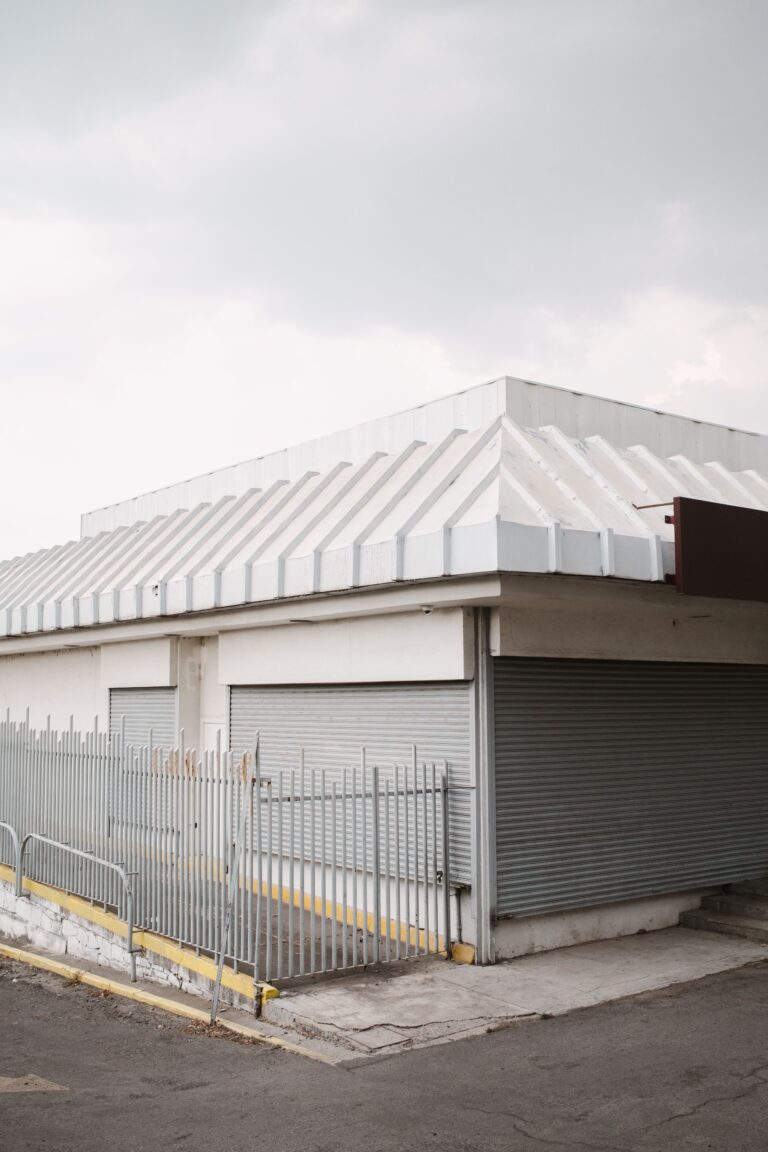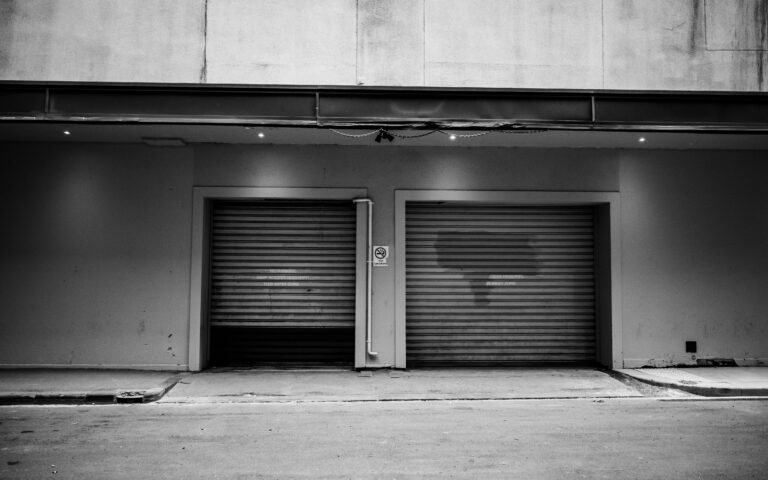
Almost every commercial security shutter ad you’ll see promises insurance savings. Most of them are vague. The number you’ll see most often is “up to 15%” with no detail about how that actually plays out — and no source you could check.
The reality is more interesting than the marketing copy, and in California specifically, the insurance angle on physical security has shifted in the last two years. Here’s what carriers actually pay attention to, what kind of movement you can realistically expect to see, and the one thing you should do the day after your install completes.
What do insurance carriers actually look at when they underwrite a commercial policy?
When a commercial insurance carrier underwrites your policy, they’re asking three questions about your physical security.
Can someone break in? How easily can a determined burglar gain entry to the premises after hours? They’re looking at your glass, your doors, your windows, your access control. A storefront with no shutters, single-pane glass, and a basic alarm scores poorly. A storefront with rated shutters on every street-facing opening, reinforced doors, and a monitored alarm scores well.
What happens if they do? If a break-in does occur, what’s the maximum loss exposure? A jewelry store has a different exposure than a liquor store than a cannabis dispensary. The carrier is multiplying probability of loss by magnitude of loss to set the premium.
What’s your history? Have you filed claims before? Has the building had break-ins under previous tenants? Is your zip code in their high-risk database? Past loss history weights heavily on what your premium will be.
Shutters move the needle on the first question directly. They affect the second indirectly — less inventory loss means smaller claims when something does happen. They don’t change the third at all. History is fixed.
What’s the insurance “warranty” that most operators don’t know exists?
Here’s something most general security blogs don’t mention. For certain commercial policies, the insurer doesn’t just reward physical security with a discount — they require specific security measures as a condition of the policy itself. This is called a warranty clause.
The clearest example is jewelers block insurance, the specialty policy most jewelry retailers carry. According to the American Gem Society’s guide to jewelry business insurance, “A jewelers block policy might require the jeweler to promise to have a certain type of safe or vault, monitored alarm system, or to follow certain security procedures when closing the shop each night.” If the jeweler fails to follow those procedures and a loss occurs, the carrier can deny the claim — not just raise the premium, but refuse to pay.
Cannabis dispensaries face a parallel reality, though through a different mechanism. California Code of Regulations, Title 4, Division 19 — the rules administered by the Department of Cannabis Control — set physical security minimums as a licensing condition, separate from any insurance contract. A dispensary that fails to maintain its mandated surveillance, alarm, and access controls can lose its license; a dispensary that loses its license becomes effectively uninsurable. We walk through what those physical minimums look like in practice on our dispensary security page, including which shutter specs tend to satisfy both the regulator and the carrier at once.
For both verticals, a security shutter isn’t really about earning a discount. It’s about not losing coverage you already have.
How much should you realistically expect your premium to move after a shutter install?
This is where most marketing copy goes off the rails. The “up to 15%” figure repeated across security shutter websites doesn’t have a documented industry source we’ve been able to find — and we looked. What we can say with confidence comes from operators reporting back after their renewal, broker conversations, and the underwriting questions our customers tell us their insurer asked.
Premium movement varies widely by carrier, by zip code, by business type, by claim history, and by what other security measures are already in place. Some operators report meaningful discounts after install. Others report no movement on the headline premium but improved coverage terms — higher liability limits, lower deductibles, or removal of policy exclusions that had previously been written in. Both are wins; only the first looks like a discount on the renewal page.
The honest answer to “how much will I save?” is: ask your broker directly, before you install. Tell them you’re considering rated security shutters across all street-facing openings. Ask whether that changes anything about your coverage terms or your premium. Get the answer in writing. The number that comes back is the only number that matters for your specific policy.
The “up to 15%” figure repeated across the security shutter industry doesn’t have a documented source. Get the real number from your own broker, in writing, before you install. That’s the only number that applies to your business.
What’s the California-specific insurance reality in 2026?
Here’s the part most security marketing won’t tell you. The California commercial property insurance market in 2024 and 2025 saw a significant wave of non-renewals, driven by wildfire exposure, rising claim costs, and changing carrier risk appetites. Olympic Insurance Agency, a California commercial broker, characterized 2024 as marking “a notable increase in non-renewal notices among commercial property insurance policies in California.”
The legal mechanics matter here. Under California Insurance Code §678.1, commercial property insurers must give written notice of non-renewal at least 60 days but not more than 120 days before the policy period ends. They must state the reasons. If they fail to give timely notice, the policy continues with no change. So you’re protected procedurally — but the law doesn’t prevent the non-renewal itself for legitimate underwriting reasons.
California has been adding new commercial protections recently, but the recent additions are wildfire-specific. Senate Bill 547, the Business Insurance Protection Act, takes effect January 1, 2026. It prohibits non-renewal of commercial property policies for properties in declared wildfire emergency zones for one year after the declaration. That’s a real protection — but it’s narrow. It does not prevent non-renewal triggered by break-in claims, vandalism patterns, or general loss history.
What that means in practice: if you operate a retail business in California and you file a break-in claim that the carrier views as evidence of unaddressed risk, the carrier can decide not to renew your coverage at the next cycle. They have to give you 60-120 days notice. They have to state the reason. But they can do it. And finding replacement coverage at comparable rates in the current California commercial market is harder than it was three years ago. Some operators end up in non-standard markets paying meaningfully more for the same nominal coverage.
The “savings” from physical security in California right now is less about the renewal discount and more about staying with your existing carrier in the first place — and demonstrating, when the renewal questionnaire comes around, that you’ve taken documented steps to reduce loss probability.
What should you do the day after your shutter install completes?
When we finish a job, we provide every customer with documentation of the install — the date, the product family, the openings covered, and the rating specifications. This is the documentation your insurance carrier or broker will want when you tell them about the upgrade.
One — email your insurance broker the install documentation the day after the install completes. Don’t wait for renewal. Don’t wait for them to ask. Send it now and ask them to add it to your policy file. Most carriers won’t volunteer to update your file based on improvements — you have to give them the paperwork. The day-after timing matters because it shows active risk management and creates the paper trail.
Two — ask explicitly: “Does this change my coverage terms or my premium at renewal?” Most brokers won’t tell you unless you ask. Some answers will surprise you — terms might change before premium, or vice versa. Either way, the question gets the conversation started before your next renewal cycle, when you have leverage to negotiate.
Three — save the email exchange. Print it, file it, archive the thread. If your premium ever gets challenged, your policy is up for review, or your renewal is denied, the documentation showing you proactively reported the install matters. It demonstrates active risk management to whoever ends up evaluating your file — and that demonstration can be the difference between a renewal at terms and a non-renewal.
Questions storefront operators ask after reading this
If I install shutters and my carrier still drops me at renewal, what are my options? Two paths. First, ask your broker to shop the policy across the carriers they have appointments with — a non-renewal from one carrier doesn’t disqualify you with others. Bring the install documentation to every conversation. Second, if standard carriers won’t cover you, the excess and surplus lines (E&S) market exists for harder-to-place risks. E&S coverage is typically more expensive and may have more exclusions, but it’s available. Your broker should know whether your situation is standard-market or E&S. If they don’t, that’s worth knowing — and worth talking to a second broker.
Can I get my insurance broker to put the projected savings in writing before I commit to the install? Sometimes, but rarely as a firm commitment. What you can usually get in writing is a conditional statement — something like “if the install is completed to the spec described and documented, the underwriter has indicated they would consider it at renewal.” That’s not a guaranteed premium drop, but it’s better than nothing, and it gives you something to point to if the renewal doesn’t reflect the change. Brokers won’t commit to a hard number because the carrier ultimately decides, not them.
Does the install need to be documented by a licensed contractor for the insurance file to count? Almost always yes. Carriers want to see install documentation from a licensed commercial security contractor with the product specifications, install date, and openings covered. A DIY install or an unlicensed install often won’t count toward the underwriting decision, even if the physical product is identical. The license number and the documentation paperwork are what the underwriter is looking for. Make sure whoever installs your shutters can produce both before they start.
If I have a multi-store policy, does the install need to happen across all locations to get any benefit? Depends on how your policy is structured. Some multi-store policies underwrite each location separately — in that case, an install at one location can affect that location’s contribution to the premium without requiring the others. Other policies underwrite at the portfolio level — in that case, partial installs may not move the needle until enough locations are covered. Ask your broker which structure applies to your policy before you commit to a rollout sequence. The answer will shape whether you do all the locations at once or stage them over time.
Where to start
If your insurance situation is genuinely driving whether or when you install shutters, do this in the right order. Talk to your broker first. Get a list of what they want to see at your storefront. Then call me. Send me your broker’s list and your address, and I’ll quote to that spec specifically. The install you do should match what your broker actually rewards, not what a manufacturer’s website promises. We’ve had this exact conversation with storefront owners in Dublin weighing an install against an upcoming renewal.
If you’ve installed shutters and never reported it to your insurance broker, you’re missing the easiest documentation update of your year. If you’re considering an install and your insurance situation matters to your decision, ask your broker what physical security improvements would matter to them — then send me the list. We’ll quote to that spec.
— Jessie Bajwa
Owner, Affordable Security Shutters
Fairfield, CA · 707-840-3435