If you’re opening a dispensary in California in 2026, you have an advantage that the first wave of operators didn’t have. You can learn from their mistakes.
A meaningful share of the cannabis dispensaries we’ve installed shutters at started life as someone else’s retail building — a former liquor store, a former auto-parts shop, a former church even. The owner went through the conditional use permit process, got licensed, opened the doors, and within twelve to eighteen months realized that the security setup that satisfied opening conditions wasn’t enough for ongoing operations. They came back to us for the retrofit. The retrofit costs more than the original install would have, takes longer, and disrupts their operating store.
Here’s what to spec on day one if you’re a new dispensary or a remodel.
Why should you read your CUP language before construction documents are final?
Your conditional use permit is the document that determines what physical security you legally have to install. Every California city has its own version. Some are vague — “adequate security measures.” Some are specific. San Jose, for example, requires that all product be secured behind a fixed barrier at close. Other cities require interior shutters specifically in front of display cases. Others require reinforced rear access. The state’s cannabis regulations layer on top of all of this.
Before your construction documents are finalized, sit with your CUP and circle every word that has a physical-security implication. Barrier. Fixed. Secured. Line of sight. Reinforced. After-hours. Each of these is a spec instruction, not a suggestion.
Then have your installer — me, or anyone — read the same document before the walls go up. We’ll tell you which words mean which products, and where in the build sequence each piece needs to go in. The cost of getting this wrong is not just the retrofit. It’s the city making you close while you fix it.
Why does the structural mounting need to be specced before drywall goes up?
A security shutter requires structural mounting. The header that supports the shutter housing has to handle the weight, the operating cycle, and the forced-entry resistance rating. If you spec this at the framing stage, your contractor builds it in. If you don’t, you’re cutting open finished walls in year two to add a header that should have been there from the start.
Same goes for the conduit runs. Motorized shutters need power and control wiring. Doing this at the framing stage costs a fraction of doing it after the dispensary is operating, and means closing the store for the install if you do it later.
Even if you’re not 100% sure you’ll install shutters on day one, spec the structural support and the conduit pathways anyway. Worst case: they sit unused. Best case: when you’re ready, the install is a fraction of what it would otherwise cost.
When should you decide between interior and exterior shutters?
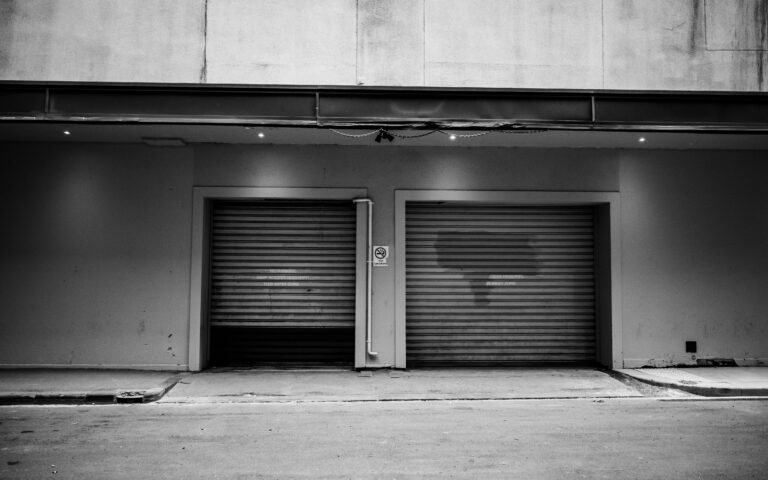
Interior and exterior shutters require different framing. They cannot be swapped easily once construction is done. The decision needs to happen in the design phase, with your architect and your installer in the same conversation.
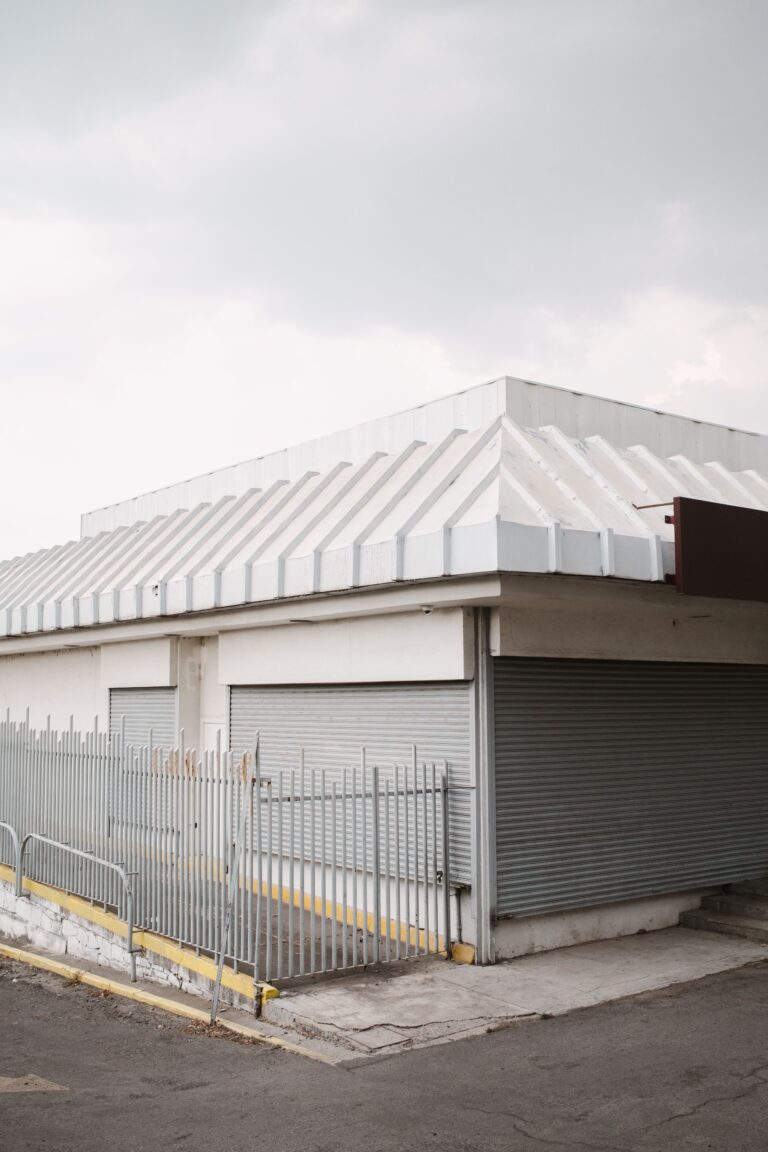
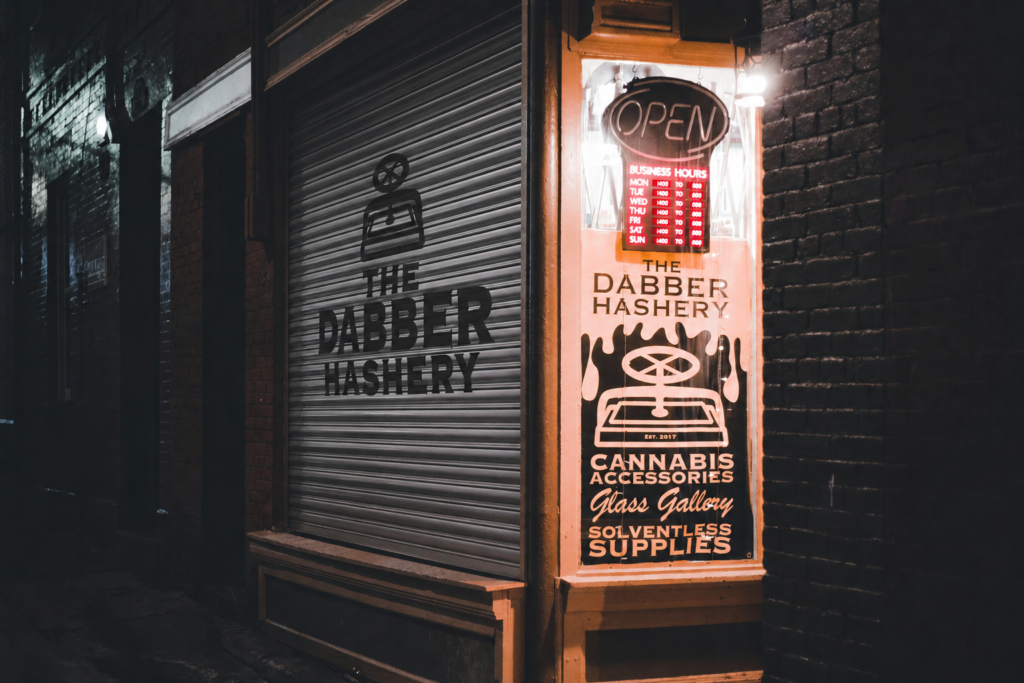
Exterior is the default for most dispensaries. Better forced-entry resistance, better deterrent presence from the street, easier to service. But it requires landlord approval for storefront modifications, may not be allowed in historic districts, and won’t work if your facade is stone, brick, or anything ornamental that you can’t drill into.
Interior is the right answer in three situations. When the exterior facade can’t take the install. When your CUP requires interior placement specifically — display-case shutters in front of product shelving are the most common case. Or when you want the storefront to look untouched from the sidewalk. None of these are downgrades. They’re different tools for different buildings.
What about daytime security — do shutters cover that too?
One thing dispensary operators forget: a shutter only solves the after-hours problem. Your daytime exposure — when the store is open, product is on the shelves, and customers are walking in and out — is a different conversation.
For dispensaries with high-end inventory in display cases, polycarbonate sheeting installed inside the display cases is the daytime solution. If somebody grabs a hammer and tries to smash a case to grab and run, the polycarbonate doesn’t break. Product stays where it is.
This matters because a shutter on the storefront and polycarbonate in the cases are complementary, not redundant. The shutter handles overnight. The polycarbonate handles open hours. A serious dispensary security plan has both.
What you build into the wall on day one costs much less than what you cut into the wall in year two. The second version also shuts your store down while you do it.
Should you spec security to your CUP, or to your insurance broker?
Cannabis insurance in California is a complicated, expensive market. The premium your broker quotes you on opening day is partly determined by your physical security spec. A dispensary with rated shutters on every street-facing opening, monitored alarms, and a documented compliance setup gets meaningfully better terms than one without.
Talk to your broker before construction starts. Get a list of what they want to see. Spec to that list. The cost of building security in is rarely much above the building-only baseline. The cost of operating without it shows up in your premium every month for as long as you’re in business — and in some cases, can determine whether you’re insurable at all after the first incident.
If you’re planning to expand to multiple dispensary locations, how should that affect your security spec?
If your business plan involves opening more than one location, lock the security spec at your first store and use it as the template for every subsequent build. The same product family, the same control system, the same install crew. Your maintenance cost compounds favorably. Your training is consistent. Your insurance broker likes it. Your city compliance reviewers see a known quantity.
We’ve installed across multiple locations for several California cannabis operators, and the second, third, and fourth stores always go in faster and cleaner than the first because the spec is settled. One of our largest cannabis customers came to us through a single store and proceeded to bring us in for store after store across Northern California — same shutter family, same controls, same crew. By store five, the install was practically a copy-paste of store one. That kind of consistency is only available to operators who treat security as part of the brand spec, not as a per-location decision.
What does the installer do, and what does your team handle?
One honest note about how the process works. We don’t pull permits. The owner or your general contractor does. What we provide is the documentation your permit application needs — drawings, specifications, product cut sheets, structural details, anything the city plan reviewer will want to see. We provide it cleanly, and we’ll answer plan-checker questions if they call us. But the permit goes through your name and your GC’s, not ours. That’s industry-standard for security trades. Don’t let any installer tell you they’ll “handle the permit” as a value-add — almost universally that’s a sign they don’t understand the permit process well enough to know they shouldn’t be in it.
What should you do right now if you’re opening a new California dispensary?
One — read your CUP and underline every physical-security word before your GC’s drawings are finalized. Words like “barrier,” “secured at close,” “line of sight,” and “fixed” mean specific products to the inspector who’ll come back to check. If those words are in your CUP and they aren’t reflected in your construction documents, the build doesn’t pass review. The right time to catch the mismatch is before the architect stamps the plans.
Two — get an installer in the room with your architect at the design stage, not after the walls go up. Structural mounting for a shutter, conduit for motors and controls, and interior-versus-exterior framing decisions all happen during design. An installer’s input at the framing stage costs a phone call. The same input after drywall costs a retrofit. Build the meeting into your project timeline early.
Three — spec security to your insurance broker’s checklist, not just to what the city minimally requires. Cannabis insurance in California treats your physical security as part of the underwriting decision. A spec that satisfies the city only is the minimum. A spec that also clears the insurance broker’s list lowers your premium for as long as you operate, and can keep you insurable after an incident that might otherwise drop you from coverage.
Questions cannabis operators ask after reading this
How early in the build process should I bring in a security installer? Earlier than feels normal. The right moment is when your architect is producing the schematic design — before construction documents, before bids go out, before the framer is scheduled. At schematic, the structural mounting, conduit pathways, and interior-vs-exterior decisions can all be incorporated cleanly into the drawings. After construction documents are stamped, every change costs more and may trigger a re-review by the city. The cost of an installer walkthrough at schematic is small. The cost of skipping it is the retrofit you do in year two.
Can I install shutters after the dispensary is operational, or does it have to happen during construction? You can install after the dispensary opens — most of our retrofits are exactly that. The trade-offs are: significantly higher install cost, a temporary store closure during the install (typically one to three days), drywall and finish work to restore the wall around the new mounting, and a permit re-submission to the city. None of those are dealbreakers, but the same install costs and disrupts more after the fact. The right time is during the original build. The next-best time is during a planned remodel. The most expensive time is on a normal Tuesday in year two.
What’s the permit timeline difference between a build-in install and a retrofit? For a build-in install, the shutter spec is part of the original construction permit set — no separate permit, no additional review, no extra timeline. For a retrofit, you’re pulling a separate building permit for the modification. In California’s busier cities, that’s usually four to eight weeks from submission to issuance, sometimes longer if Planning has to weigh in. Plus the install itself. So a retrofit typically adds two to three months total versus a same-time build-in install that adds zero.
If my landlord owns the building, who pays for the structural prep — me or them? Almost always you, the tenant. Landlords in cannabis-zoned commercial real estate generally treat security improvements as tenant improvements — you pay, and depending on your lease, you either keep the improvements at the end of the term or remove them and restore. There are exceptions in long-term leases where the landlord co-invests in improvements that increase the building’s long-term value, but those are negotiated, not standard. Get the answer in your lease language before you commit. If the lease is ambiguous, ask the landlord directly and get the answer in writing.
Where to start
The right time to talk to a security installer is now — not after you’ve poured concrete, not after the city has signed off on the plans, not after you’ve taken occupancy. Send us your CUP, your floor plan, and your timeline. We’ll come walk it with your contractor and your architect, tell you what we’d build in, and give you a number you can plan against. No pitch. If your existing GC’s plan already covers the security spec well, I’ll tell you that too.
— Jessie Bajwa
Owner, Affordable Security Shutters
Fairfield, CA · 707-840-3435