San Francisco is not like the rest of the Bay Area.
The buildings are older. The retail is more expensive. The owners care more about how the storefront looks than they do almost anywhere else we work. And the security problems are different too — less about smash-and-grab break-ins, more about graffiti, sleeping in doorways, and the occasional jewelry-store hit that’s planned weeks in advance.
We’ve done 16 documented installs in San Francisco over the past five years. Designer fashion boutiques. A jewelry brand’s flagship. A high-end home goods store. A high-end furniture brand. A high-end consignment boutique on the 4th floor of an SF building. A pizza restaurant. A bar. A youth center. A veterinary hospital. And a single shutter on the 13th-floor mailroom of a federal courthouse downtown.
Patterns emerge when you see this many SF jobs back to back, and most of them are not in any marketing brochure. Here is what the dataset says about hardening a high-end storefront in San Francisco specifically — drawn from five years of actually doing the work in the city, not from a stock-photo product page.
Why are SF storefront security jobs aesthetic-first and security-second?
Almost every SF install we have done has had the same conversation up front. Before security spec, before product comparison, the question is: what will it look like from the street?
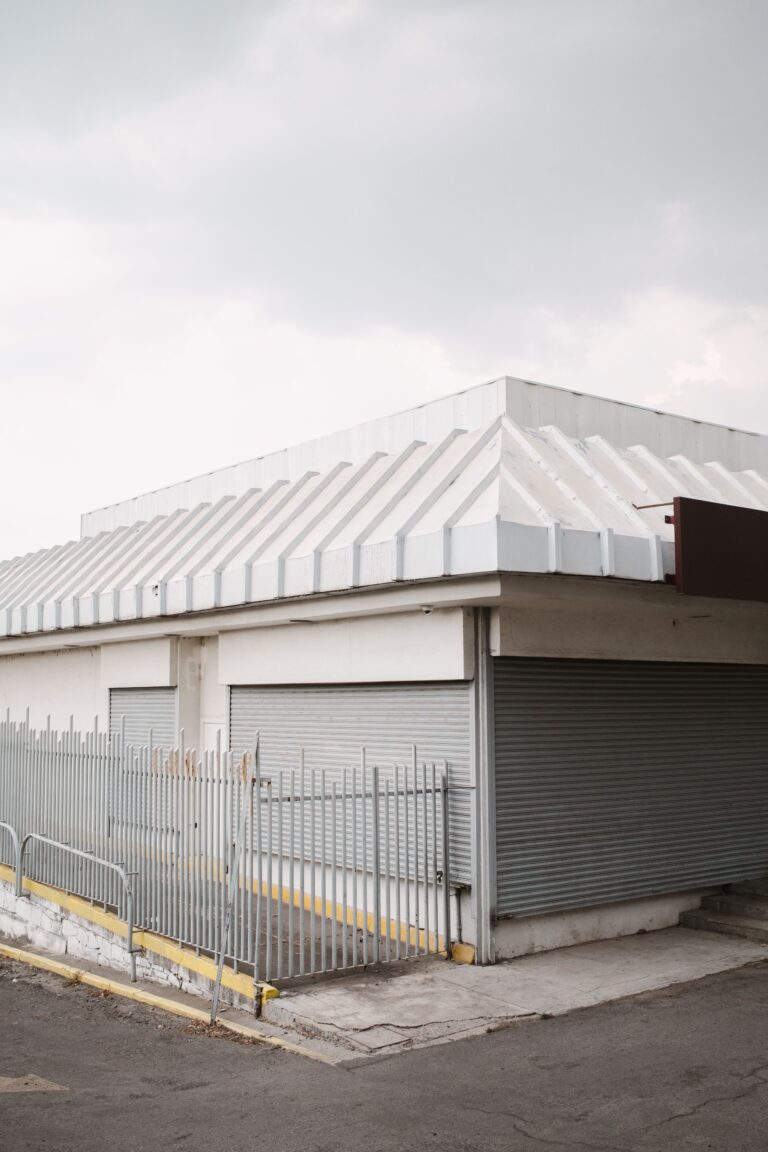
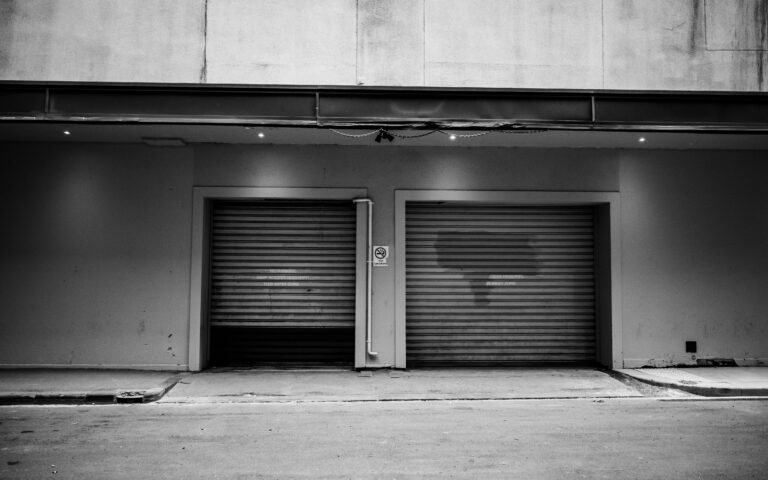
For a designer brand or a high-end boutique, the storefront is the brand. A solid metal shutter with exposed mounting hardware and a visible housing box on the exterior is a brand problem before it is a security solution. The vast majority of our SF installs are perforated shutters in bronze, black, or color-matched custom finishes — visible enough to act as a deterrent, transparent enough that the storefront still feels open after hours, finished well enough that the shutter does not read as construction-site equipment.
In a Concord liquor store, you can roll down a flat industrial shutter and the owner is happy. In SF, that is a non-starter for most retailers. The product matters, but the finish matters more. Bronze perforated is the dominant SF spec for a reason — it deters without making the building look hardened.
Why do SF storefronts force interior installs more often than other cities?
Across all the cities we work, about 20% of our installs are interior-mounted. In SF, the rate is meaningfully higher. The reasons are SF-specific.
Historic facades. Many SF retail buildings have stone, brick, or ornamental plaster facades that you legally cannot or practically should not drill into. An exterior shutter requires structural mounting; if your building is a historic facade, that is not happening. Interior is the only path.
Lease restrictions. SF commercial leases routinely restrict any modification to the exterior of the building, especially in mixed-use buildings where retail sits below residential. Interior shutters require no landlord permission for the storefront-facing structure, only for the interior framing — a much easier conversation.
Brand continuity. A high-end boutique frequently wants the storefront to look untouched from the sidewalk. Interior-mounted shutters mean the glass and signage stay visible to passersby; the shutter only deploys when the lights go off. The brand stays on display 24 hours a day.
If you have been told your building cannot have shutters because the front is stone, or your landlord said no, or you do not want metal visible from the street — you almost certainly have an interior path. Most SF security shops have not done enough interior installs to know how to handle this well. We have.
We have installed shutters on the 4th floor of an SF building. We have installed a single shutter on the 13th floor of a downtown courthouse. People assume shutters are a ground-floor product. They are not. Anywhere there is a glass entry that needs to close at night, a shutter is an option.
How are San Francisco storefront threats different from East Bay threats?
If you compare our 16 SF jobs against an equivalent number from Concord or Oakland, fewer SF calls came after a clean-cut break-in. SF retailers more often call us about persistent low-level damage — graffiti tags returning every few weeks, doorway alcoves being used for sleeping or worse, attempted entry that did not succeed but left frame damage, vandalism without theft.
One of our SF home goods clients had an angled doorway alcove that homeless individuals were sleeping in overnight. Before they leave, they would urinate in the alcove. The owner was walking in every morning to clean up a mess in front of their store. The shutter we installed was not really a theft barrier — it was an alcove blocker. It deploys at close, the alcove is sealed, no one sleeps there, the morning routine resets to normal.
For these patterns, a perforated shutter that deploys at close acts more like a presence-deterrent than a vault door. The threat is not a coordinated break-in; the threat is the slow erosion of the storefront over months. A shutter does not have to be Fort Knox to solve it. It has to be there.
How does luxury SF retail actually buy security shutters?
Almost every high-end SF job we have done came through a contractor, not directly from the brand. A jewelry chain’s national security director coordinates with a Bay Area general contractor, the GC handles the install, the GC hires us. A designer furniture brand’s facilities team works through their construction partner; that partner brings us in. A consignment boutique’s GC scouts installers; we get the call.
This is not an accident. Luxury brand procurement is structured to flow through pre-vetted construction partners rather than direct-to-vendor. The GC carries the brand’s specs, the brand’s aesthetic standards, and the brand’s compliance requirements. They bring in trades — including security trades — that they trust to deliver to the brand standard. After we have worked with one or two of those GCs successfully, we end up on their go-to list, and they bring us in for the next brand we have never heard of.
If you run security or facilities for a brand with SF presence: ask your construction partner who they would use for a shutter install. If they do not have a name on file, that is worth knowing — and we would be glad to be that name.
Why do SF storefront security calls feel different from elsewhere?
One thing the dataset does not show but every install conversation does. Operators in SF tend to be more emotionally affected by what is happening to their store than operators in lower-cost markets. Part of it is that SF retail is hard to run profitably right now — the margins are thinner, the rent is higher, the staffing is harder. Each incident lands heavier because the operator is already running close to the line.
One of our SF grocery clients was visibly distressed when we walked his store the morning after a break-in. He had been there for years. He told us about the experience — emotionally, not transactionally — and once we were done with that store, his family had us do three more of their stores in the city. Not because we sold them on it. Because trust got built when someone who had just been hit hard was treated like a person, not a sales lead.
If you are reading this as an SF operator who has had a hard time recently, the most important thing I can say is: do not make decisions in the first 48 hours. Get your store stabilized. Sleep. Then call. I will come look at it. No pitch. If you do not need shutters, I will tell you that.
What should you do right now if you run a high-end storefront in San Francisco?
One — start with your GC, not with a shutter installer. If you’re an SF brand, your construction partner almost certainly has shutter recommendations on file or knows who they’d ask. That’s the path that lands you a vendor who already understands brand-standard install quality. Going direct as the brand is slower and often produces a vendor who doesn’t know your aesthetic standards.
Two — don’t assume interior is a downgrade. SF’s stone facades, historic-district rules, and mixed-use lease restrictions force interior installs more often than any other Bay Area city. Interior-mounted shutters preserve the brand on display 24 hours a day and don’t require landlord permission for exterior modifications. The 4th-floor and 13th-floor installs prove the product works anywhere there’s a glass entry that needs to close.
Three — design for the threat your block actually has. In SF, the threat for most storefronts isn’t a coordinated break-in — it’s the slow erosion of graffiti, alcove use, and attempted entry that doesn’t succeed but damages the frame. A perforated bronze shutter that deploys at close handles all of those without making the storefront feel hardened during business hours.
Questions San Francisco storefront operators ask after reading this
Do I need a permit to install a security shutter in San Francisco, and how long does it take? For most exterior shutter installs in SF you’ll need a building permit, and if the building is in a historic district or has an officially designated facade, the permit path is longer because Planning has to weigh in alongside Building. For straightforward exterior installs on non-historic buildings, plan four to eight weeks for permit issuance. For interior installs that don’t modify the exterior of the building, the permit conversation is much simpler — sometimes just an over-the-counter approval. Your GC or the installer should pull the permit; never sign a deal where you’re expected to handle SF permitting yourself unless you’ve done it before.
Can I install a shutter if my building is in a designated historic district? Sometimes yes, sometimes no, and the answer depends almost entirely on whether the install is interior or exterior. Exterior installs on a historic facade are usually a no — Planning won’t approve mounting hardware on a designated facade. Interior installs that don’t touch the exterior almost always clear, because the historic designation protects the public-facing facade, not the inside of the storefront. If you’ve been told your building “can’t have shutters” because it’s historic, that’s likely shorthand for “can’t have exterior shutters.” Ask specifically about interior.
Will my landlord let me install a shutter, and what’s the cleanest way to ask? For interior installs, the conversation is usually short — you’re modifying interior framing, not the building exterior, so the lease language about exterior modifications doesn’t apply. Bring the landlord a one-page summary of what’s being installed, where, and what removal would look like if you ever leave. For exterior installs in mixed-use buildings, expect a longer conversation. Some landlords will require you to use their preferred contractor, restore at lease-end, or add the shutter to the building’s insured assets. Get the answer in writing before you spend.
What’s the right shutter color and finish for a luxury storefront? Bronze perforated is the SF default for a reason — it deters without reading as industrial, and it photographs well against most modern facades. Black perforated works for darker storefronts and minimalist brands. Color-matched custom finishes are an option for any brand with a specific palette — we’ve matched to brand colors directly when the designer requested it. Avoid solid shutters in chrome or unfinished aluminum on a high-end storefront; both finishes carry construction-site associations that hurt the brand. The finish decision should be made jointly with whoever owns the brand’s visual standards, not by the installer.
Where to start
If you operate a storefront in San Francisco, your security situation is probably more nuanced than a generic shutter pitch can address. Send me your address, your building type, and a description of what you are worried about. I will come look at it free, tell you what I would do, and if I think shutters are not right for your situation, I will tell you that.
— Jessie Bajwa
Owner, Affordable Security Shutters
Fairfield, CA · 707-840-3435